Paintings
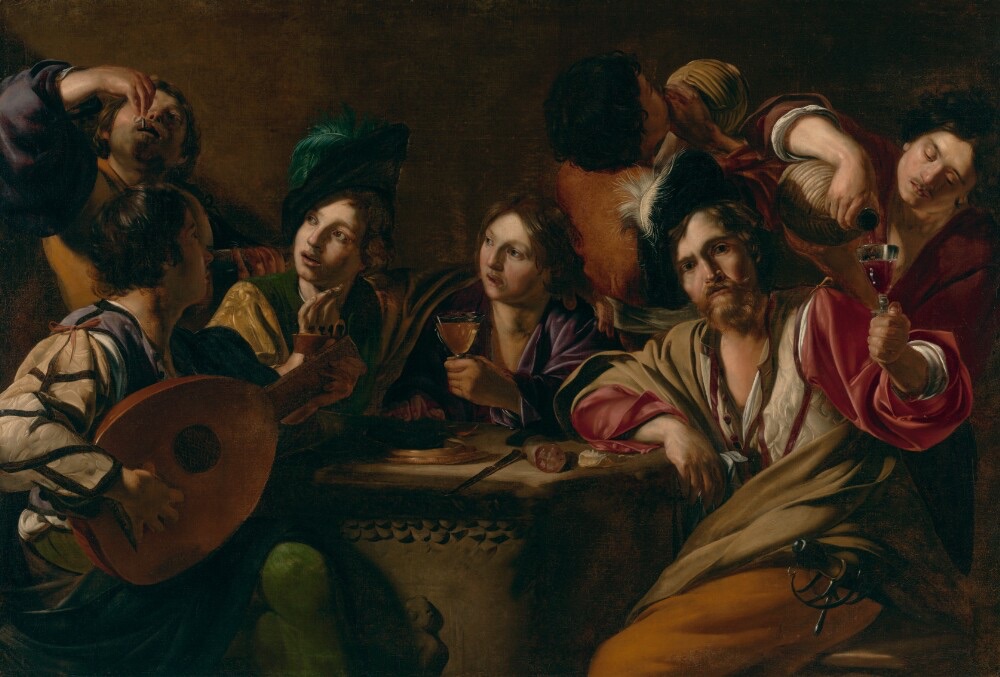
A Drinking and Musical Party
A group of young men gather around an improvised table made up with an antique Roman marble fragment to eat, drink, and play music. Such images of lively contemporary gatherings of half-length figures are characteristic of what the biographer Joachim von Sandrart described as the “Manfrediana methodus,” a type of painting popularized by Bartolomeo Manfredi in Italy in the early seventeenth century. Although the scene is essentially one of merrymaking, the suspense is palpable: a knife protrudes threateningly towards us in the center and the hilt of the sword of the bearded man is menacingly exposed. The festive company – the painter seems to suggest – could suddenly turn into a heated brawl. Although Manfredi was not properly a pupil of Caravaggio, his strikingly realistic depictions of genre scenes characterized by a sumptuous palette and stark contrasts of light and shade made him the first and most significant propagator of the Caravaggesque style.