Sculpture & Decorative Arts
Secrétaire
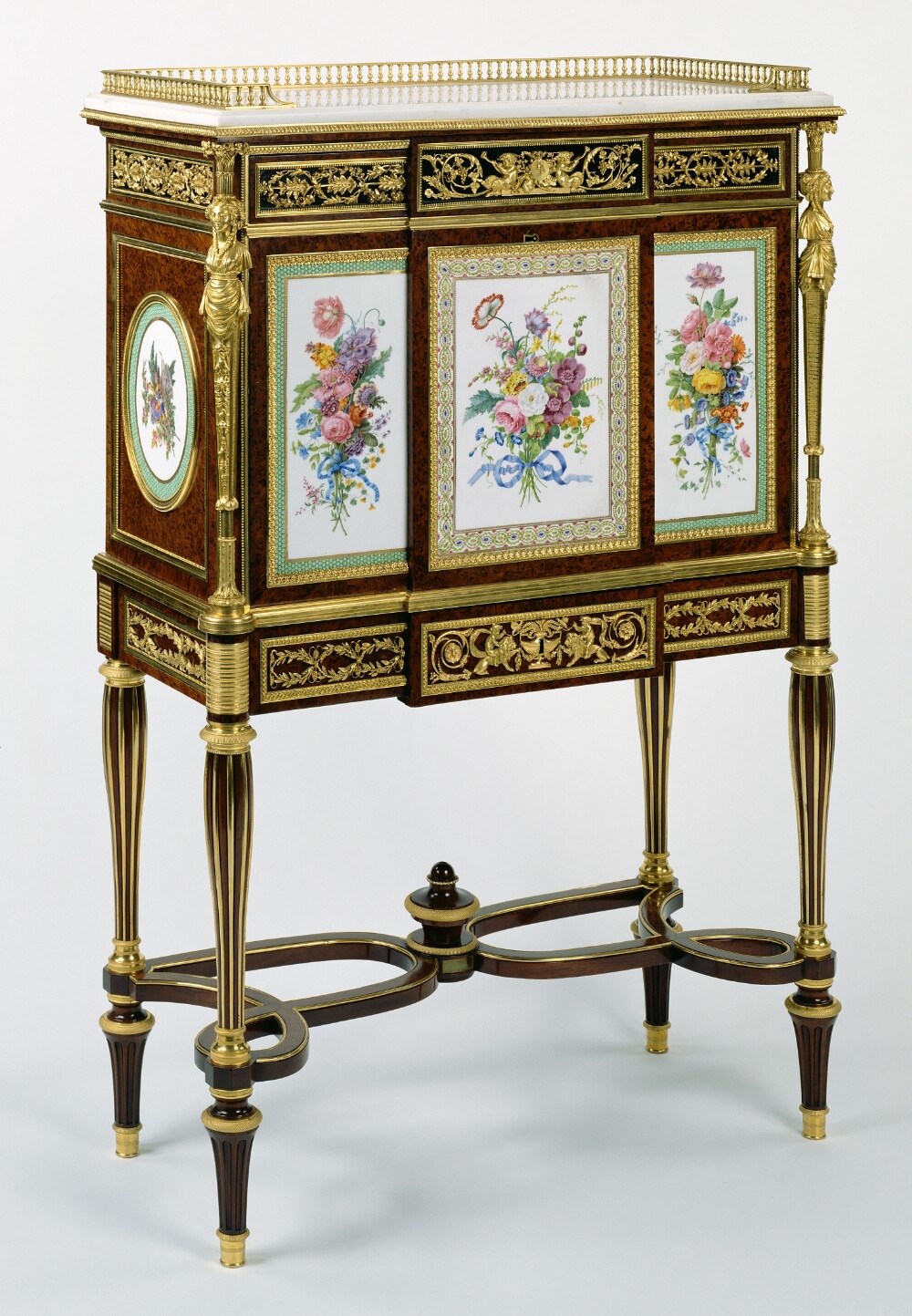
Wealthy people in the 1700s used secrétaires to fulfill all their writing needs and duties. The front of this secrétaire opens outward and downward, providing a writing surface. Inside, shelves and drawers stored writing supplies. The gilt-bronze decoration, the porcelain plaques, and the expensive woods used in creating this piece demonstrates the wealth and prestige of the owner.From the 1750s onwards, the Sèvres Porcelain Manufactory supplied marchand-merciers (art dealers) with porcelain plaques for incorporation into various forms of furniture and other items. Dealers ordered the plaques directly from Sèvres and then sent them to ébénistes (furniture-makers) with specific orders about the object they should ornament. The dealers could therefore offer their clients considerable choice over the final design of highly refined furniture.Sometimes, the design and the execution do not quite match. On this secrétaire, the Sèvres Porcelain Manufactory probably produced the plaques before the secrétaire’s design was finalized. The two oval plaques on each side were painted in a horizontal orientation, but the ébéniste Adam Weisweiler mounted them onto the piece vertically, with the groups of musical instruments tilted on their sides.The Rothschild family, a family of wealthy Jewish bankers, owned this secrétaire in Vienna, Austria at the beginning of the 1900s. During World War II, the Nazis confiscated their homes and belongings and the furniture ended up in storage in salt mines near Altaussee, Austria. The Allied Forces recovered the artworks in the mines and returned them to their owners. This secrétaire has marks on the back indicating it was meant to be in the collection of Hitler’s new museum that was never built.