Sculpture & Decorative Arts
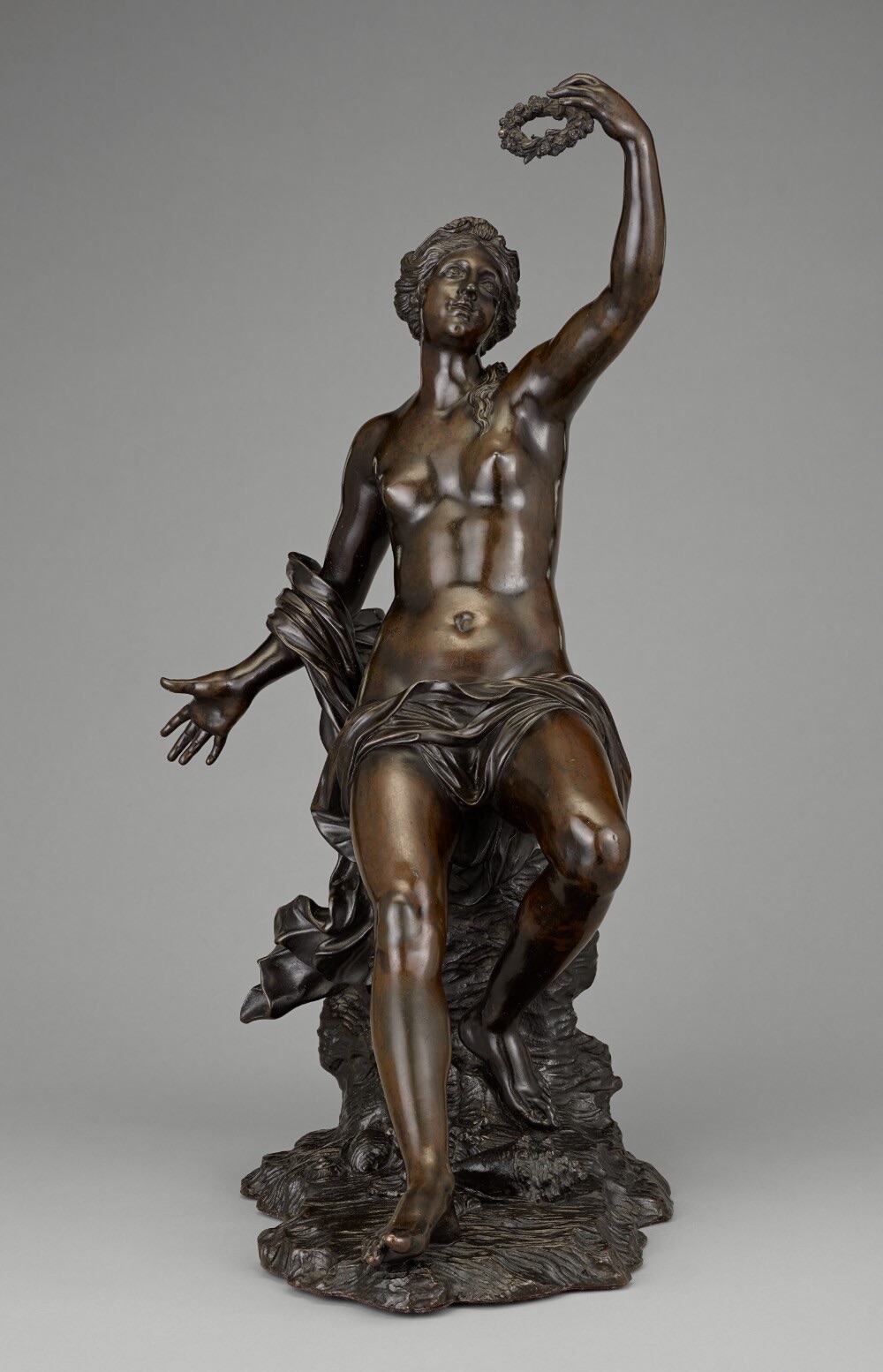
Figure of Venus Marina
Leaning back, Venus, goddess of love and beauty, gently twists her head to look at the small wreath she holds aloft in her left hand. Nude, her drapery falling down upon her legs, she rests on a rock amidst seashells. According to myth, Venus was born from the foam of the sea, an aspect of her legend suggested by the sculpture's title, Venus Marina. Although cupid or a dolphin usually accompanies Venus Marina, neither are present here. This tabletop bronze was made after a model attributed to the French sculptor Robert Le Lorrain. As was characteristic of the Rococo period, the sculpture is a subtle work with no large movements or heroic story. A restrained sensuality of delicate curves and flowing drapery dominates as the sculptor focused on small variations of texture and line. He contrasted, for example, the complex shape and rough texture of the striated rock with Venus's smooth skin and simple open forms. Other similar Venus figures attest to the popularity of this genre of sculpture in France in the early 1700s.