Sculpture & Decorative Arts
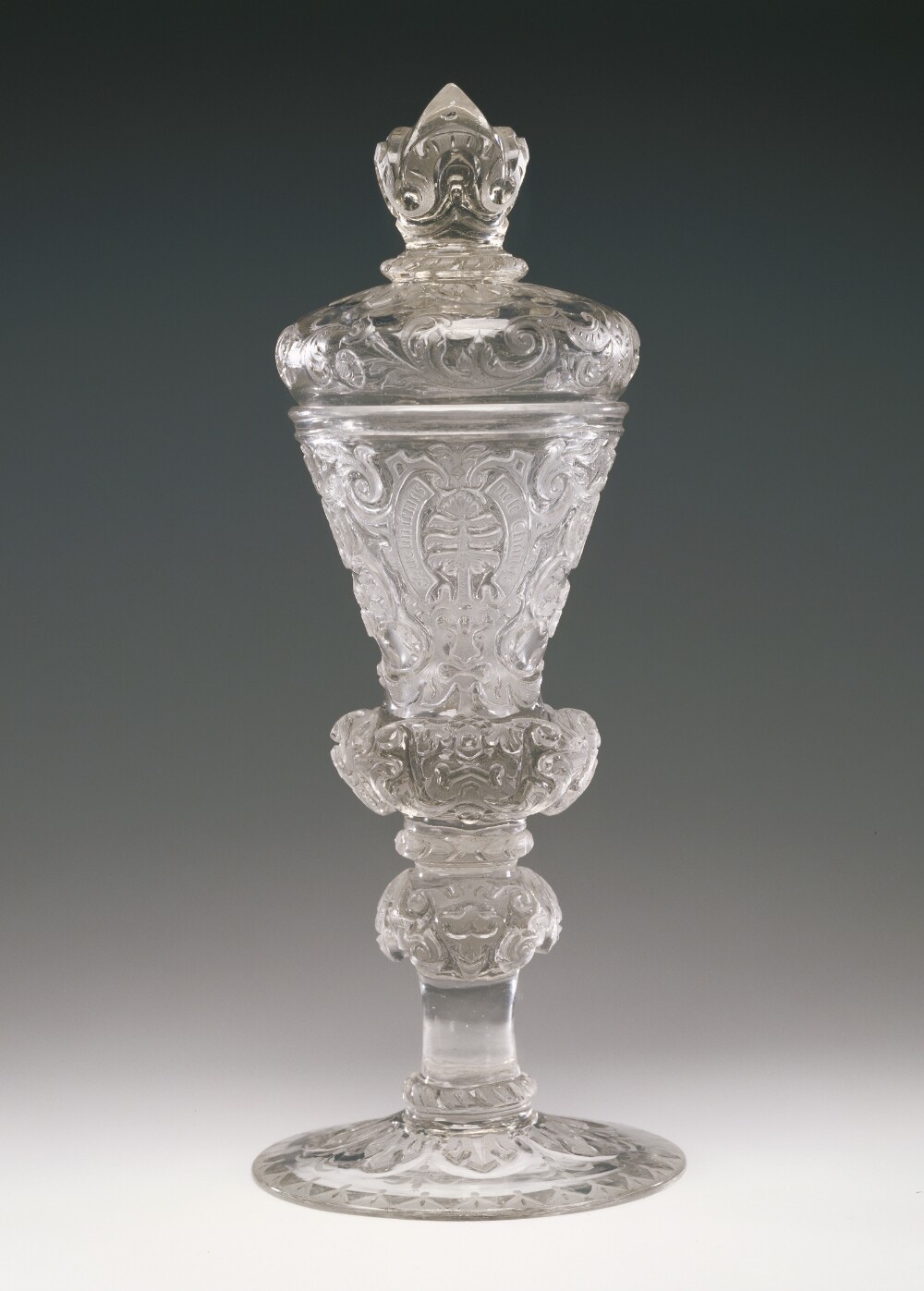
Covered Goblet
The clarity and brilliance of the glass used for this covered goblet imitated the rarer and more costly rock crystal material used for precious, princely vessels. Deep matte forms, such as the waterfowl and a grotesque face set amid curling acanthus leaves, are raised up from the surface in sharp contrast to the smoothly polished background. This technique, known as Hochschnitt, or relief cutting, was an important innovation at the end of the 1500s. Glassmakers had developed glass with a harder consistency that could therefore withstand such aggressive carving and polishing. This goblet belongs to a group of similar vessels that all bear the arms of the counts of Schaffgotsch, their motto Aucun temps ne le change (Untouched by time), and their badge of a fir tree. In 1688 Count Christof Leopold Schaffgotsch installed a glass-engraving workshop on his lands to produce richly wrought vessels for his own use. Other goblets produced for him still survive, although most have now lost their domed cover, unlike the Getty Museum's piece.