Sculpture & Decorative Arts
Fountain
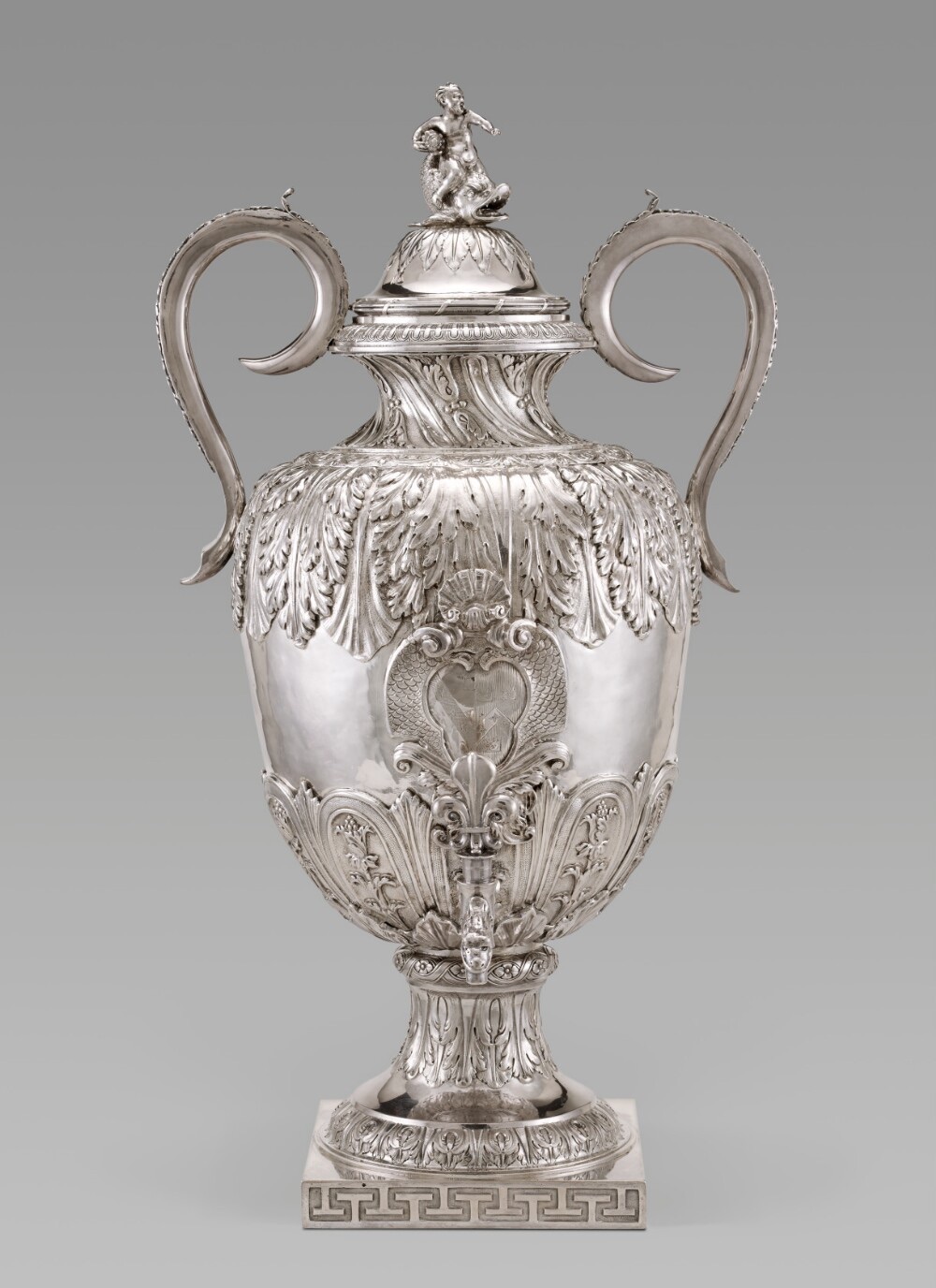
This fountain, although altered, is a rare survivor of seventeenth-century French silver. The fountain would have held water and stood on a sideboard, displayed with other pieces of ceremonial silver. The servants would have poured water from it to wash utensils between the courses of a meal.The fountain must have arrived in England from France before 1698, because Ralph Leake, a London silversmith, made a copy of it in that year. He also created a silver basin for each of the fountains. Sometime between 1758 and 1761, Nathanial Curzon, then 5th Baronet Curzon of Kedleston, owned the group of two fountains and their basins, which he had engraved with the arms of Curzon impaling Colyear (for his wife, Carolyn Colyear). From the 1760s until the mid-1940s, these vessels stood in an alcove in the dining room of the Curzon country residence, Kedleston Hall, in Derbyshire, England, designed by Robert Adam.Very little French silver has survived from the late 1600s because almost all of it was melted down by 1709 at the order of Louis XIV. The silver bullion was used to replenish the French royal treasury, which had been nearly bankrupted by the king's constant wars. This vessel survived because it left France soon after it was made.