Sculpture & Decorative Arts
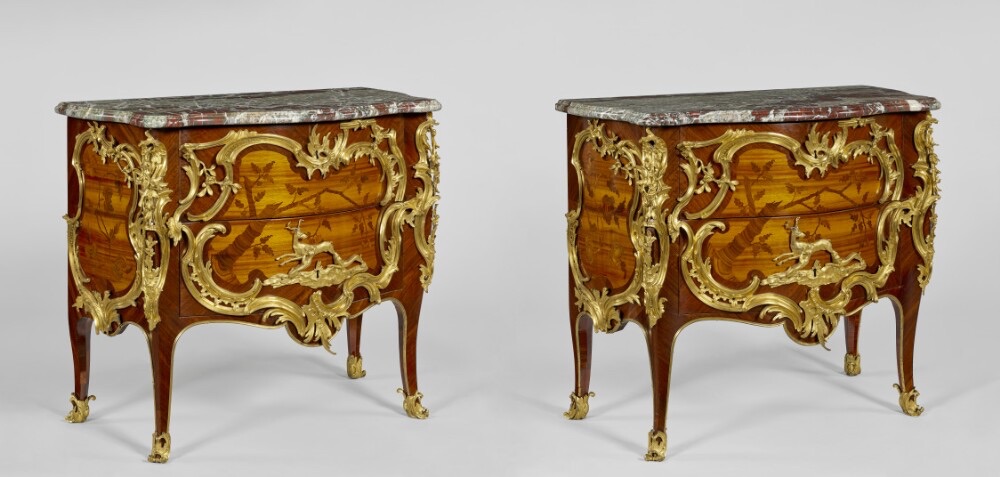
Pair of Commodes
The pair of commodes were possibly part of a larger set of similarly decorated pieces that were all in the collection of the ruling family in Dresden, Germany, at the end of the 1700s. Gilt-bronze mounts of a stag attacked by dogs decorate the fronts of this pair; guns, quivers for arrows, and hunting horns overlay the corner mounts. These elements symbolize the hunt, one of the most important pastimes of the nobility in the 1700s, when stag hunting was considered the highest art of the sport.The commodes are stamped BVRB indicating that they were made by the Parisian cabinetmaker Bernard II van Risenburgh. However, they are not typical of his work, perhaps because they were apparently made not for a French client, but for a German one. Pieces of similar size and shape are not found elsewhere among his works, nor is the marquetry typical of his style and the large and profuse gilt-bronze mounts are of designs quite unlike any others used by him.