Sculpture & Decorative Arts
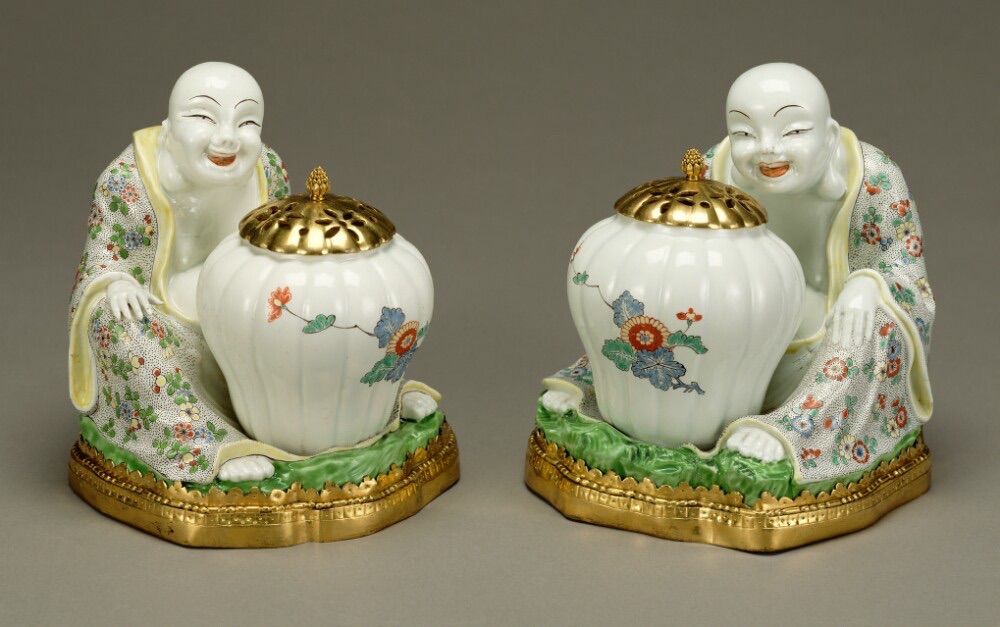
Pair of Magot Figures
Imitating Asian designs in both form and decoration, the Chantilly porcelain manufactory produced these potpourri vases in France. These smiling seated figures with long earlobes, dressed in monks' robes, represent the popular Buddhist god of good fortune or contentment, known as Budai (Put'ai) in China and Ho-teiin Japan. In the 1700s, Europeans called these figures magots, meaning bizarre or grotesque figures in a Chinese or Japanese style, modeled in a variety of poses.Containers for potpourri first appeared in the 1700s in France, made from precious metals, porcelain, lacquer, or hardstones; recipes for their sweet-smelling contents were soon prevalent.