Sculpture & Decorative Arts
Set of ceramic figures
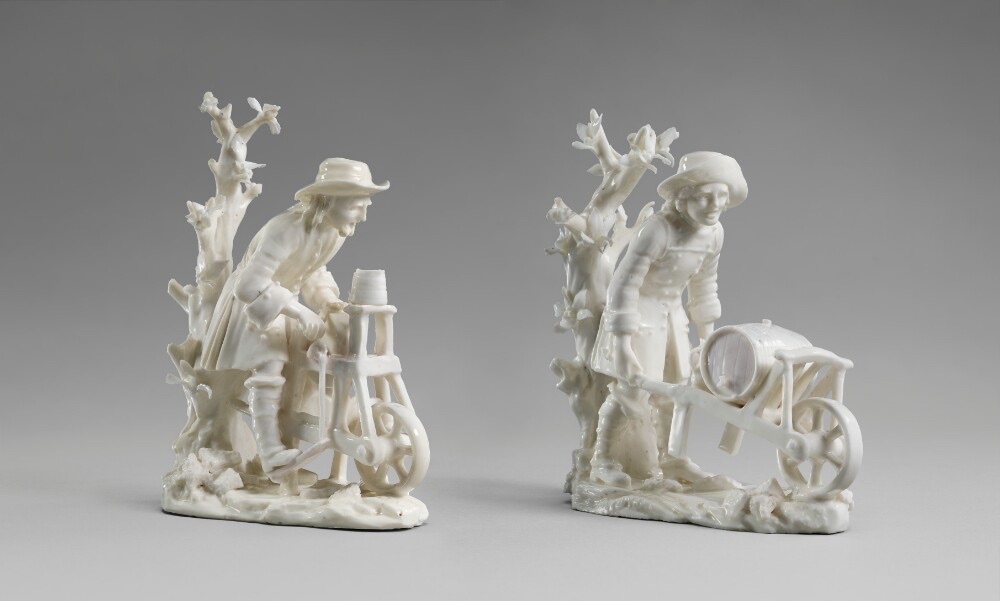
The white-glazed figures depict two itinerant tradesmen leaning over their separate tasks. Dressed similarly in long vented coats and wide-brimmed hats, each stands on a narrow ovoid base before a blossoming tree trunk. One man sharpens a knife on a grinding stone that he turns by pumping a pedal with his right foot; the stone being mounted to a wheelbarrow supporting a bucket for the water needed to lubricate the stone, a ladle, and a hammer. The other man pushes a wheelbarrow supporting a barrel and a ewer necessary to distribute vinegar to customers. Realistic representations of humble workers were fashionable at the time strongly influenced by a contemporary series of prints, the Cris de Paris (Cries of Paris), illustrating street merchants. This knife grinder and vinegar vendor were adapted from compositions by Christophe Huet (1700-1759) based on the Cris de Paris images designed by François Boucher (1703-1770). They are the only known examples of these remarkably expressive models that vividly convey the penury and physical strain of the laborers. Ironically, they were luxury objects probably made as part of a larger group to serve as decoration on an elaborate dining table during the dessert course.