Sculpture & Decorative Arts
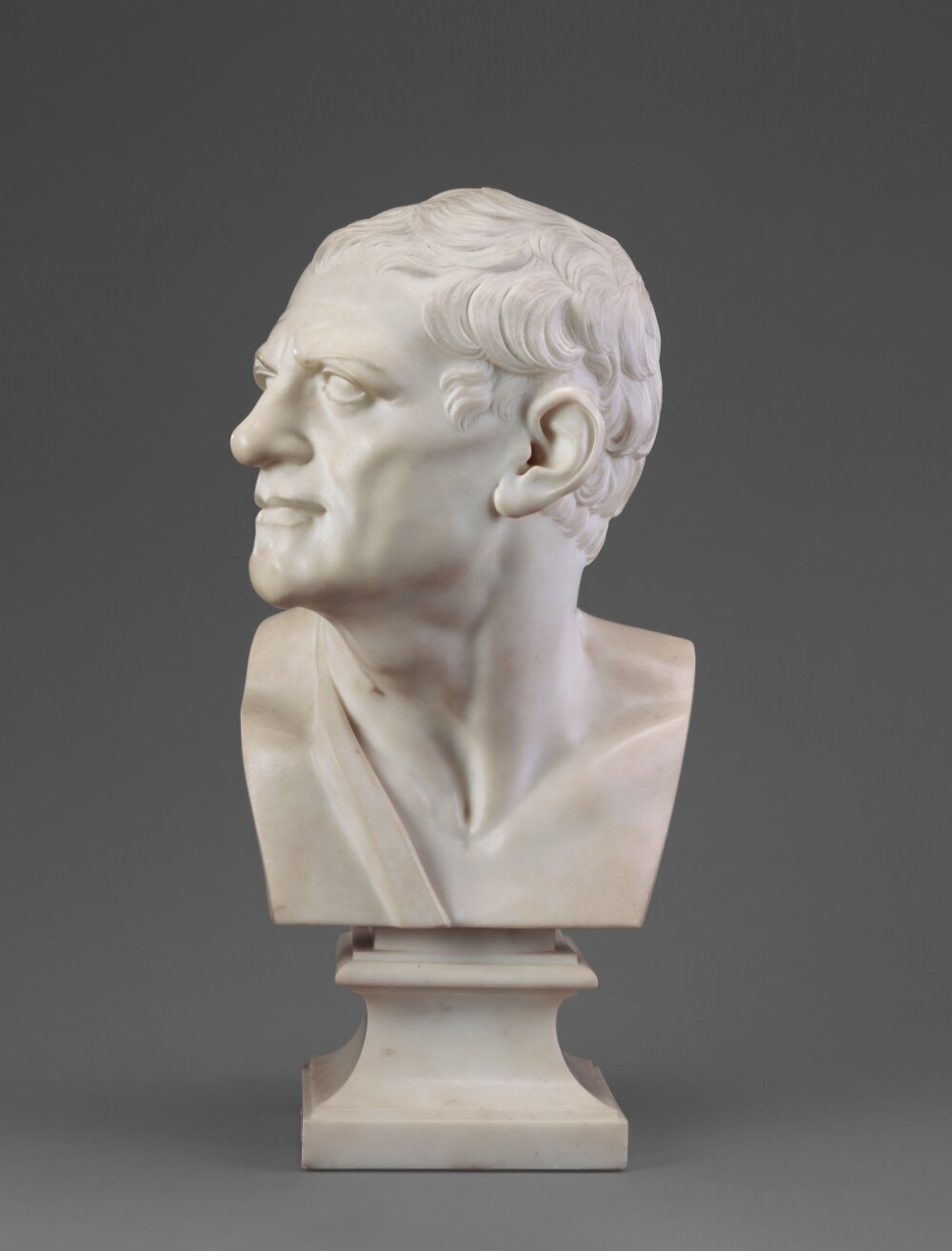
Bust of a Man (after the antique)
With his strong profile, authoritative expression, and dramatic turn of the head, this bust was closely modeled on an ancient marble head in the Museo Nazionale, Naples. When it was made in 1758, the bust was mistakenly believed to represent the famous Athenian orator Demosthenes. For those who could not afford to own real antiquities, busts like this one could be ordered from one of many eighteenth-century English sculptors who spent time living in Italy. Such artists established their reputations making replicas of famous antiquities for British aristocrats. Charles Watson-Wentworth, the second marquess of Rockingham, either commissioned this bust directly from the sculptor, Joseph Wilton, or bought it from the sculptor's stock of busts made all'antica. Along with Joseph Nolleken's statues of Venus, Minerva, and Juno, the bust was incorporated into a Neoclassical decorative scheme, perhaps first in the marquess's London townhouse and then later in his country house in Wentworth. Both the individual sculptures and the decorative scheme were designed to be expressive of the owner's taste and classical erudition.