Sculpture & Decorative Arts
Table
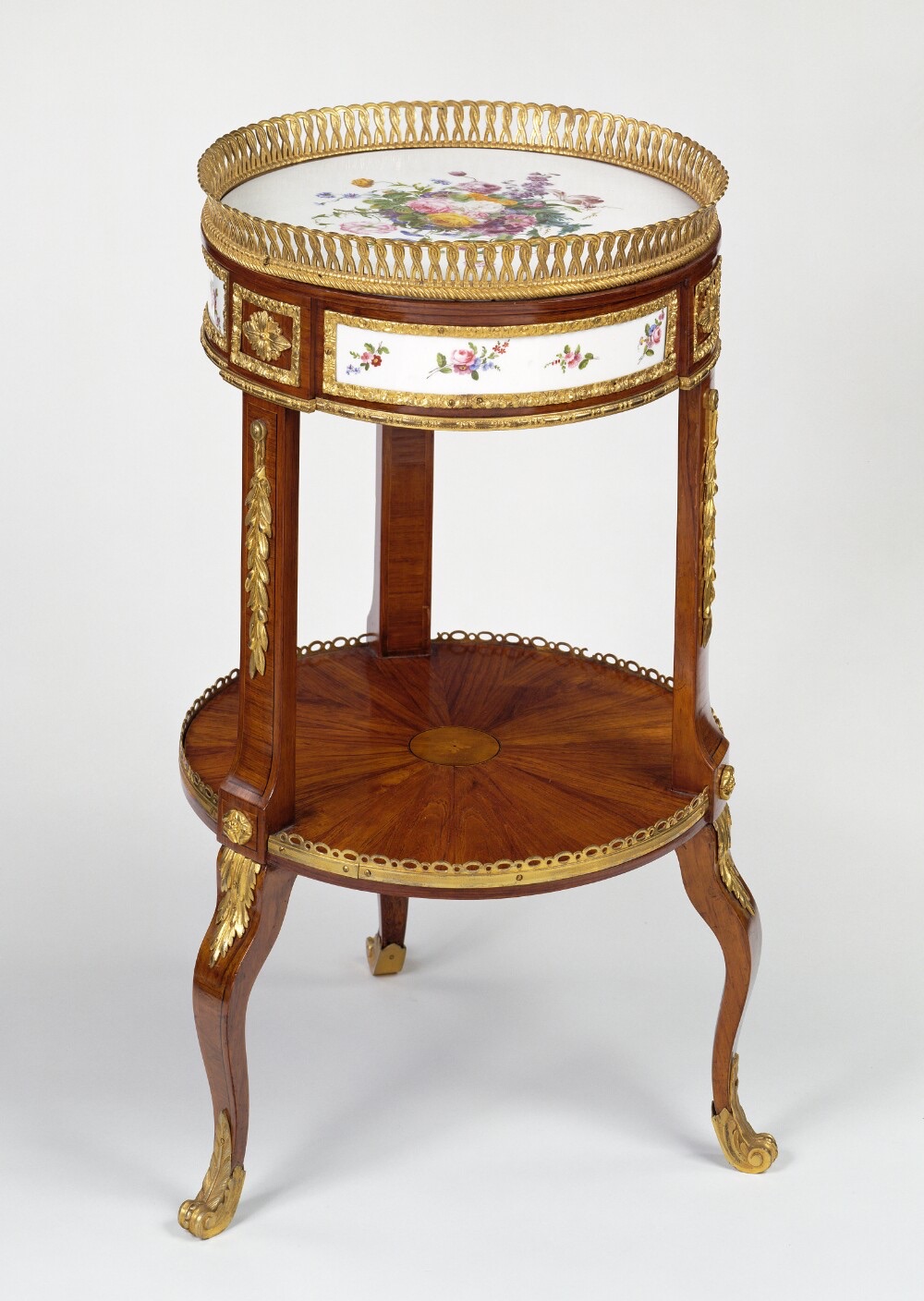
This table’s porcelain top, which could withstand heated vessels without damage, was ideal for serving tea or coffee. Such tables, appreciated for their practicality and transportability, quickly became widespread among elite households from the 1760s. The marchand-merciers (art dealers) encouraged this trend, ordering many pieces of furniture with porcelain plaques.Creating this kind of worktable involved many people. First, the marchand-mercier commissioned the furniture’s design and ordered the porcelain plaques. Craftsmen at the Sèvres Porcelain Manufactory created, painted and gilded these plaques. An ébéniste (furniture maker) made the wooden parts, leaving space for the plaques. A variety of craftsmen designed and made the gilt bronze decorative pieces that attach to the wood, while another specialized worker lined the drawers with silk or velvet. Finally, the ébéniste assembled the desk and returned it to the dealer to sell.