Sculpture & Decorative Arts
Mantel Clock
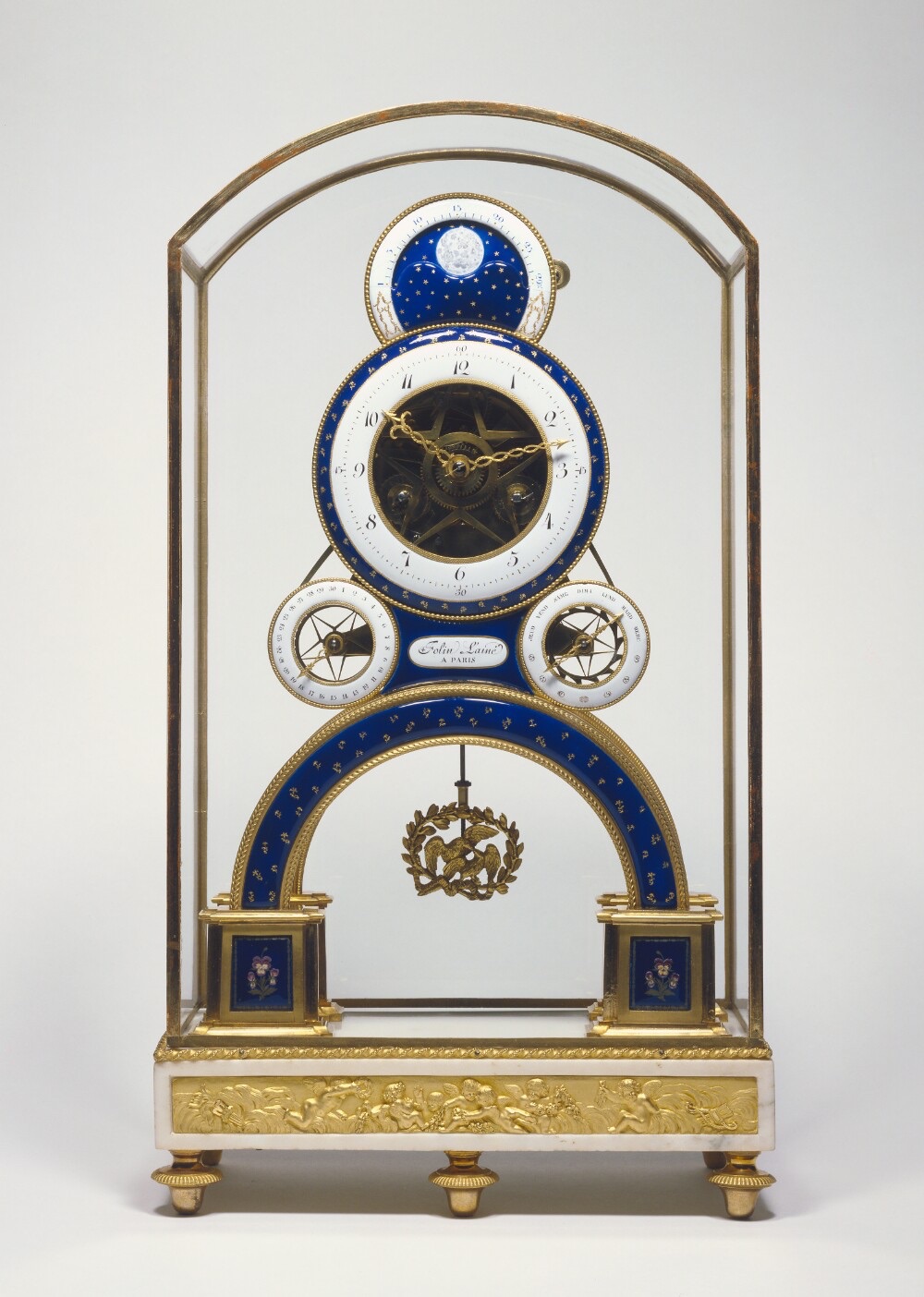
Known as a "skeleton clock" because of its exposed movement (inner workings), this type of timepiece became fashionable at the end of the 1700s. While other styles of cases hide the clockworks from view, skeleton clocks celebrate the beauty of the mechanical pieces and the ingenuity of the craftsperson. This style draws attention to the process of making the clock, highlighting both the art and craft of this piece. People who owned these clocks appreciated the beauty of the movement as much as the attractiveness of the case.The clock’s four enameled dials each display different information. While the large dial tells the time, one lower dial indicates the day of the week and the other shows the day of the month. Above, a fourth dial records the current phase of the moon. Perhaps people who appreciated looking at the exposed clock movement also valued the additional scientific information on the other dials.