Sculpture & Decorative Arts
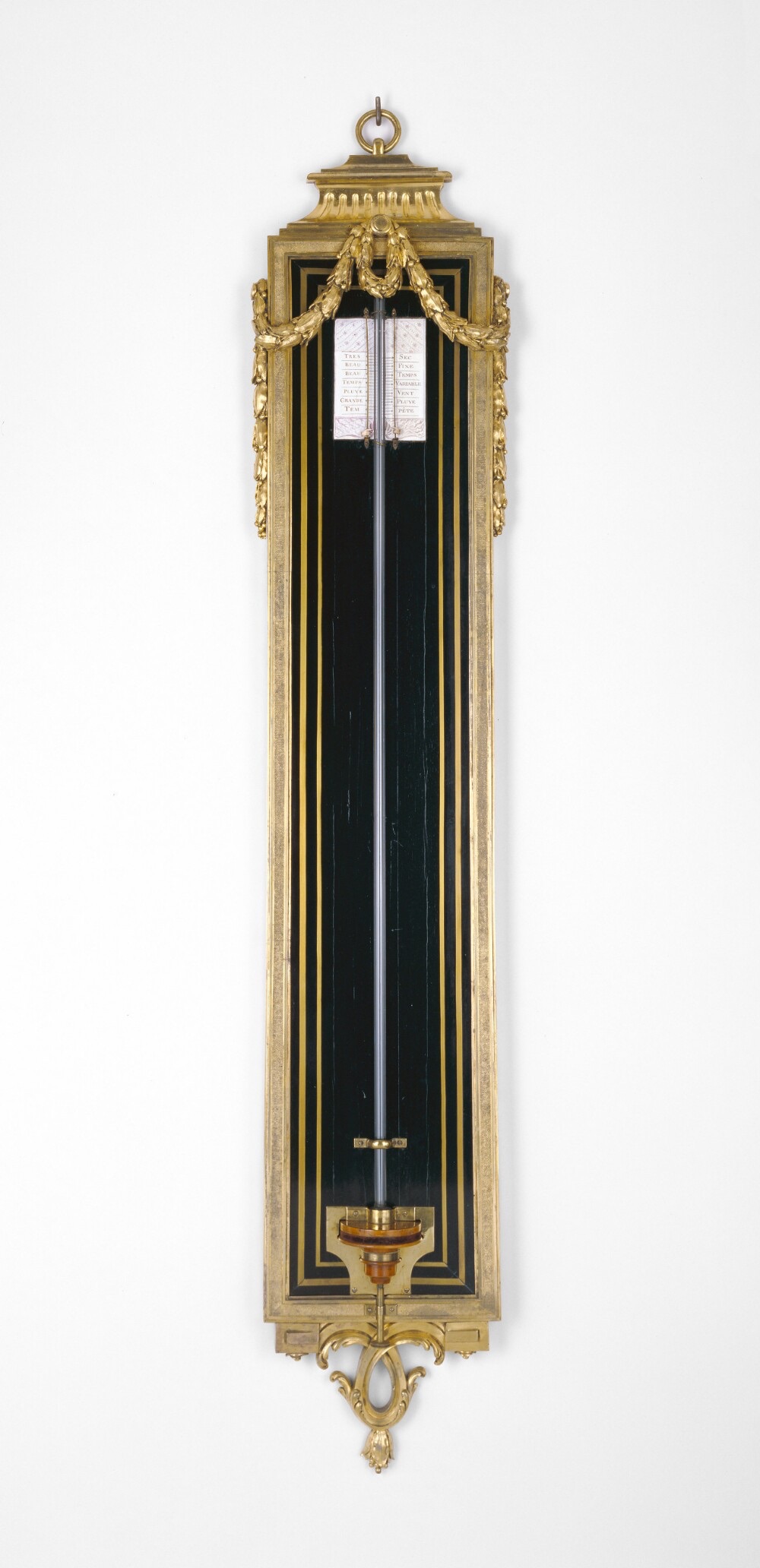
Barometer
Many barometers produced in the 1700s have survived, which suggests that they were relatively common. Invented in 1643 by a pupil of Galileo Galilei (1564–1642), the barometer greatly appealed to the scientific spirit of the late 1600s and 1700s and soon became a popular and useful ornament for interiors.On this barometer, the level of mercury encased in the glass tube rises or falls according to the atmospheric pressure, thereby indicating one of the possible weather conditions on the enamel plaque. In addition, two sets of readings could be compared using the two small moveable ivory hands on either side.