Sculpture & Decorative Arts
Vase
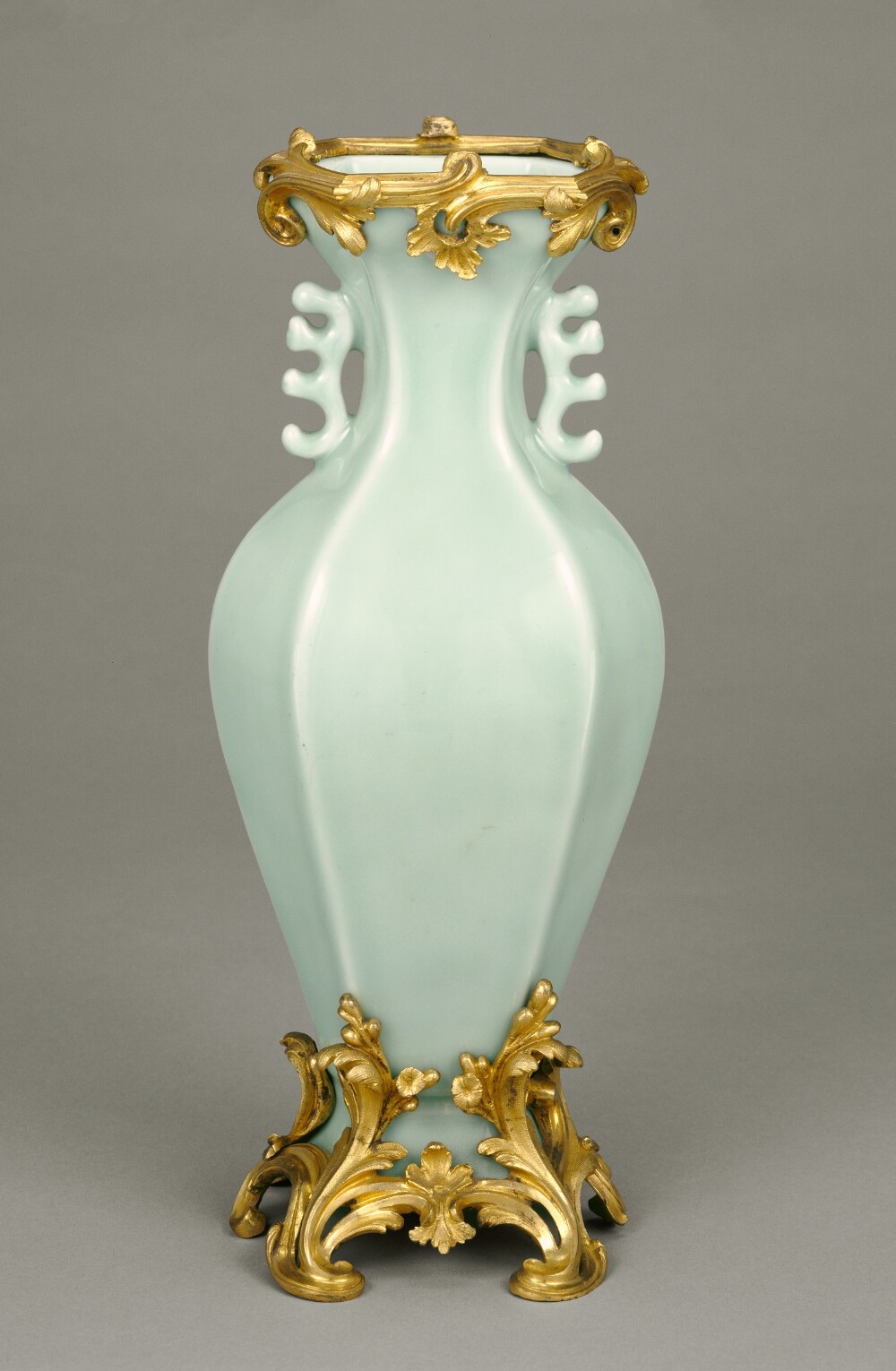
The soft gray-green color of the glaze on this vase is known as celadon. The name is probably a corruption of Saladin (Salah-ed-din), Sultan of Egypt, who sent forty pieces of ceramics decorated with this glaze to the Sultan of Damascus in 1171. Alternatively, some scholars think the name was taken from the gray-green costume of Céladon, a character in a French play of the 1600s. The practice of mounting Chinese porcelain in Europe goes back at least to the Middle Ages. These mounts were a tribute not only to the beauty of the material but also to its extreme rarity. By the mid-1600s, when larger quantities of Chinese and Japanese works of art began to arrive in Europe, they continued to be mounted in precious or semi-precious metals to emphasize their unusual colors and design. The leafy gilt bronze mounts that decorate the foot and mouth of this vase would have protected its fragile edges from being damaged.