Sculpture & Decorative Arts
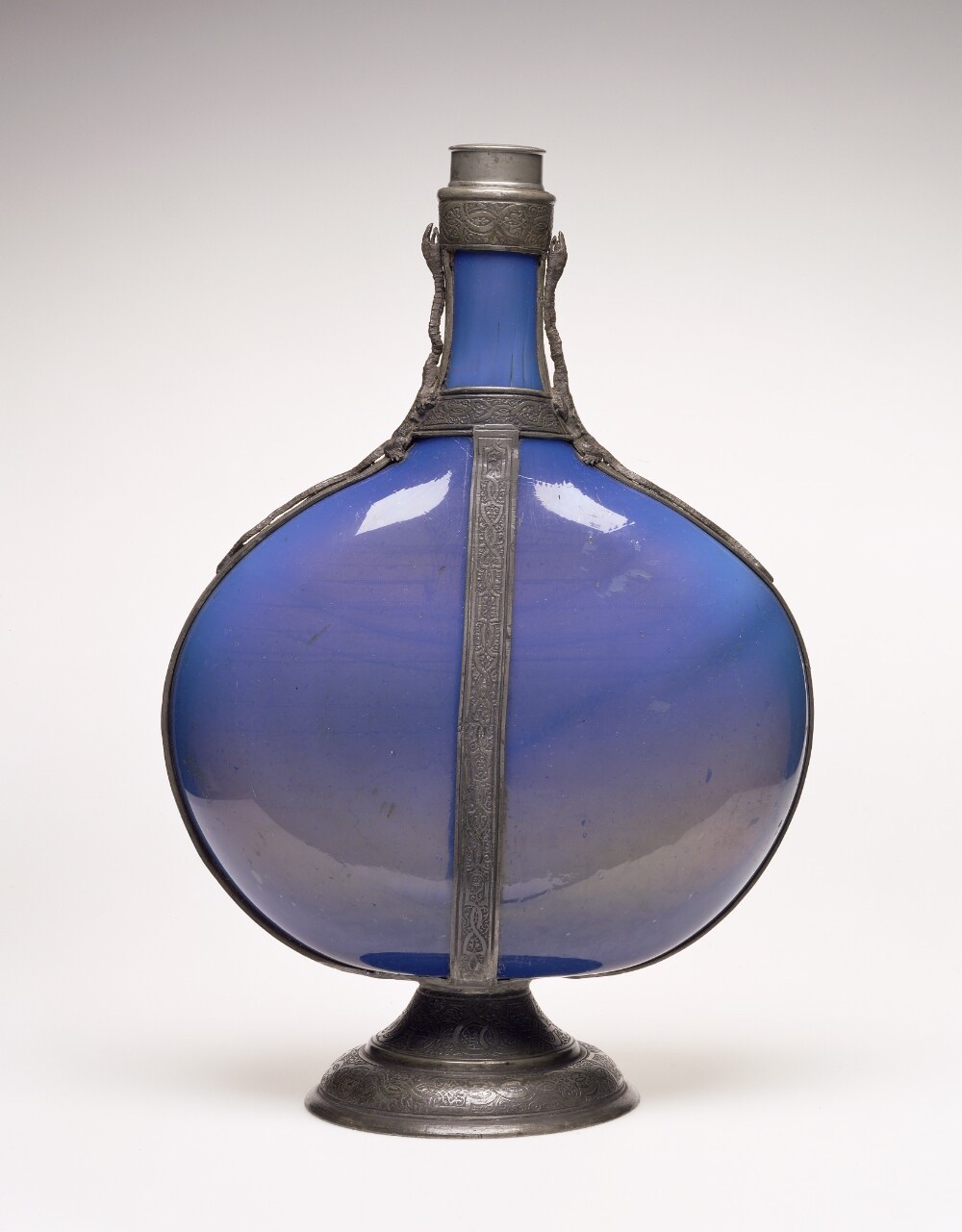
Flask
Dichroic glass is so called because it displays two different colors: one appears when light shines through the object and the other when light is reflected off the object. Developed by Roman glassmakers, dichroic glass was prized for its resemblance to natural stones, both in its color and luminescence. Although of uncertain origin, the pilgrim flask form of this vessel is thought to be typically French. The mounts display the type of shallow interlace pattern associated with the designs of François Briot, a French metalworker who frequently worked in pewter. In addition, the salamander attached to either side of the neck of the flask is the emblem of the French King François I, who often employed Briot.