Sculpture & Decorative Arts
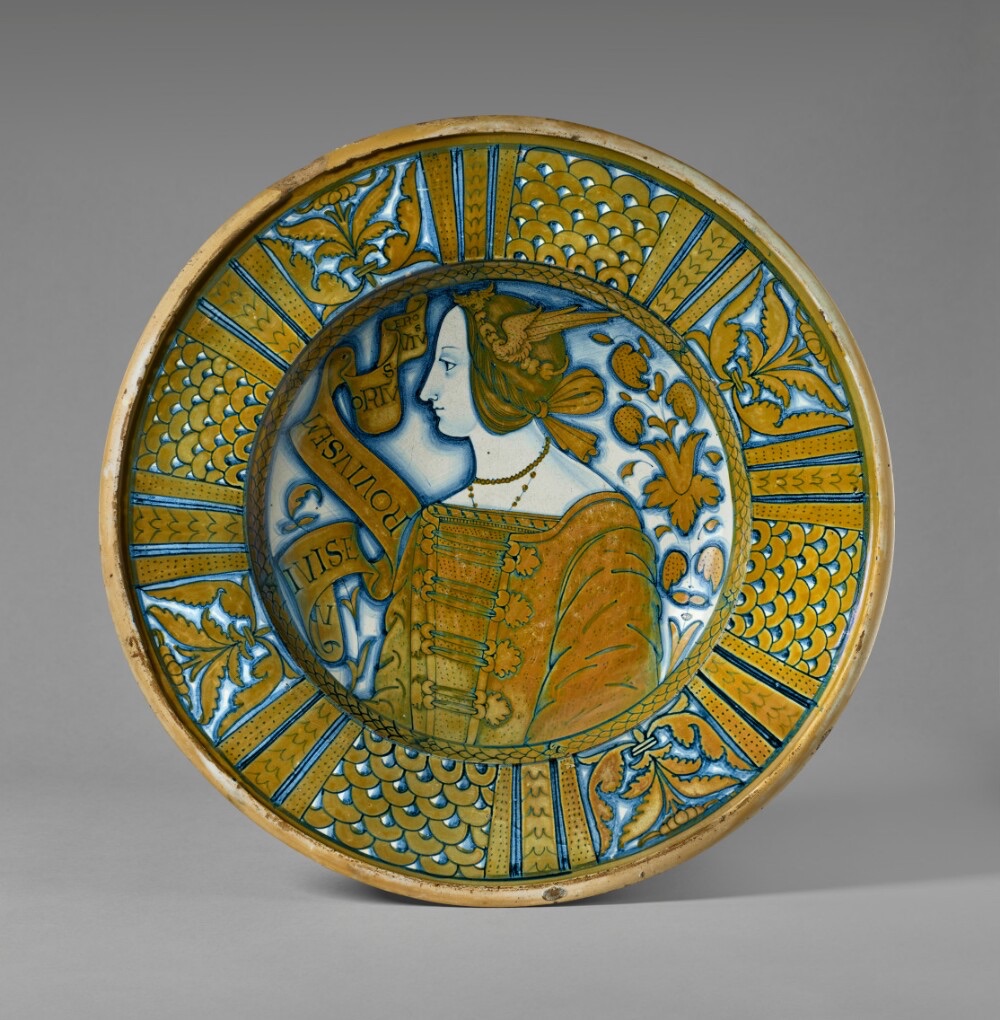
Lustered Plate with a Female Bust
The scroll on the plate reads "When alive, I shall be among the living, and when dead, I shall [still] be among the living." This statement is difficult to interpret; it may be a declaration of undying love, possibly for a woman who had died, or an expression of the fleeting nature of life. Busts of men and women in profile, like that seen here, often appear on ceramics. This idealized female image might reveal the influence of the work of Umbrian painters such as Perugino, who were born or worked very near the town where this plate was made. By the 1400s Hispano-Moresque lusterware was imported into Italy, where it became popular as a precious-looking but less costly alternative to vessels in gold and silver. The difficult luster process was mastered in a few places in Italy, notably Deruta and Gubbio. Whereas Gubbio luster is distinguished by its reddish-gold iridescence coupled with multi-colored decoration, Deruta luster, like this plate, more closely imitates the yellowish-gold luster and blue painting of Hispano-Moresque ceramics.