Sculpture & Decorative Arts
Christ Child
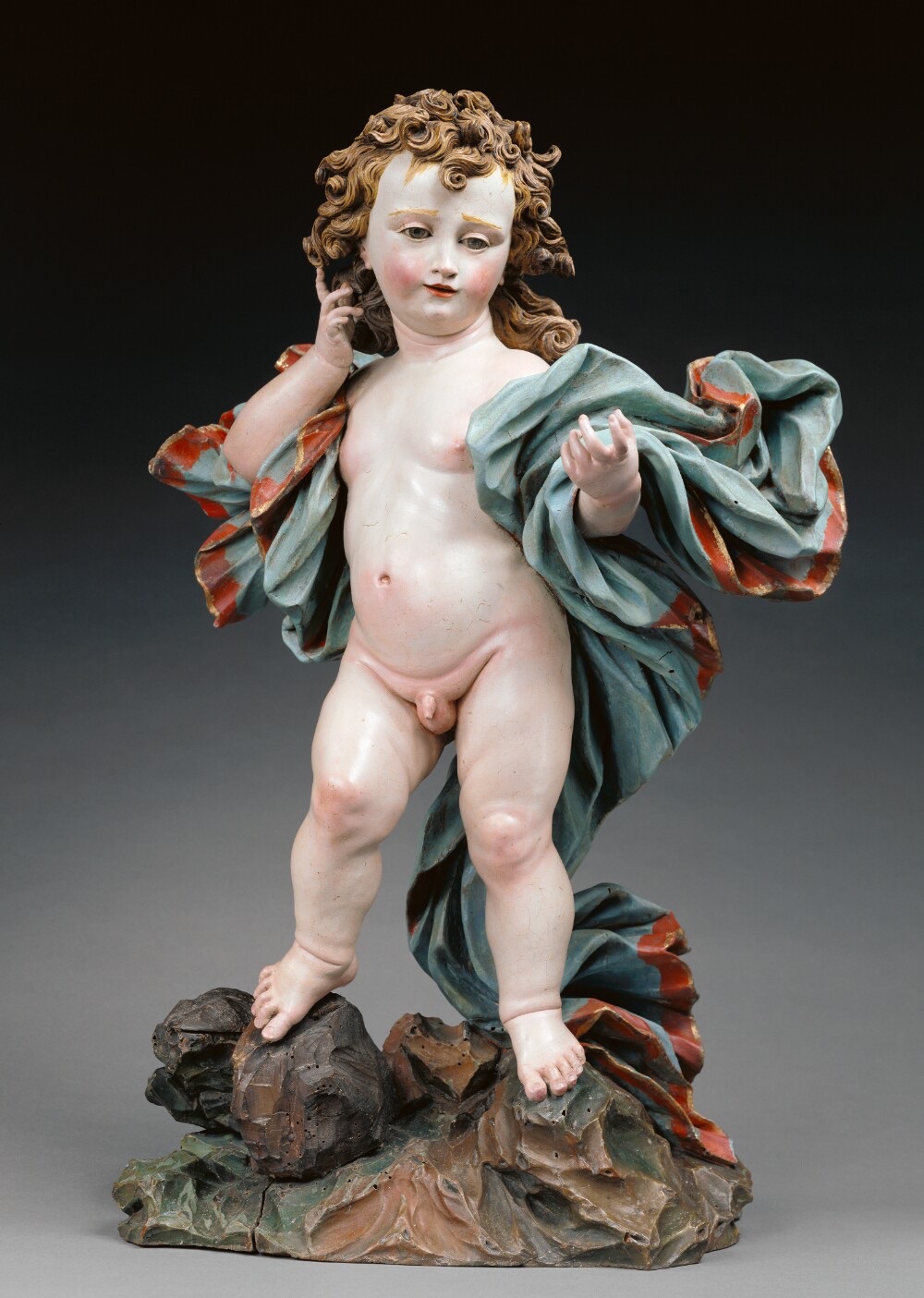
With cherubic red checks, rich locks of curls, and folds of baby fat, the polychromed life-size wood statue of the nude Christ Child would have appealed to his audience. The child balances on a rocky landscape, his cape billowing around his shoulders. In his hand he may have once held a globe referring to his role as Salvator Mundi, the Savior of the World, or grapes, referring to his sacrifice on the cross. The nude Christ Child was a popular subject in European wood sculpture beginning in the 1300s. Theologians of this period understood Jesus's nudity as a sign of his human nature. During the 1500s and 1600s, Saint Ignatius Loyola and Saint Anthony of Padua further encouraged devotion to the humanity of Christ. This figure is a high Baroque version of the popular theme, full of animation and theatricality. The fully carved-in-the-round statue was probably designed as a devotional image for an oratory, chapel, or church. It may also have been carried in religious processions or other spectacles of civic life, which were often staged by confraternities.