Sculpture & Decorative Arts
Pair of Vases
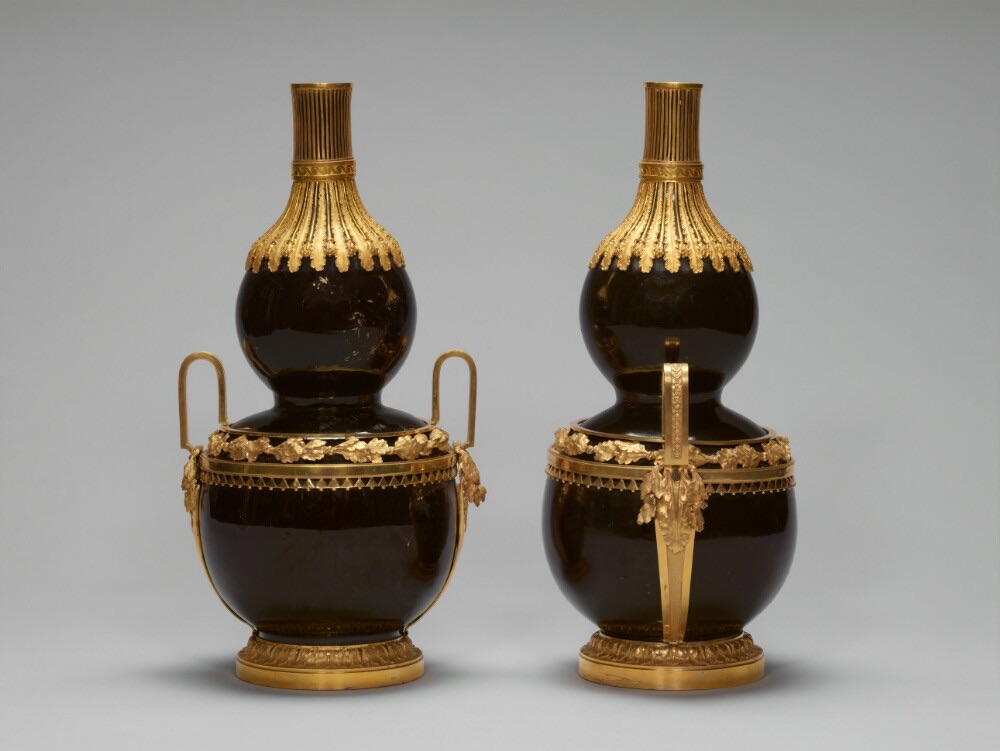
These Chinese vases are known as "mirror-black ware" because of their hard glaze and lustrous finish. Potters applied the black glaze, made from ground minerals such as iron oxide, to dry porcelain. When the color dried, the porcelain was fired again and then decorated with gilded patterns. The gold, however, had never been baked onto the surface of the vessel and tended to rub off easily, leaving only a slight shadow on the surface of the porcelain. The original pattern can still be faintly detected on the surface of this pair. The vases were imported into France and then mounted in the 1770s with gilt bronze leaves, guilloches, and wave-patterned mounts of a unique design around the necks. Gilt bronze lids, now lost, would have covered the tops. The simple, swelling form of each vase, known as a double-gourd shape, and the gilt-bronze ornaments reflect shifting fashion towards the Neoclassical style in Paris. The vases would have originally been placed on a mantelpiece or piece of furniture where their mounts and lustrous color could be admired for display alone.