Sculpture & Decorative Arts
Vase
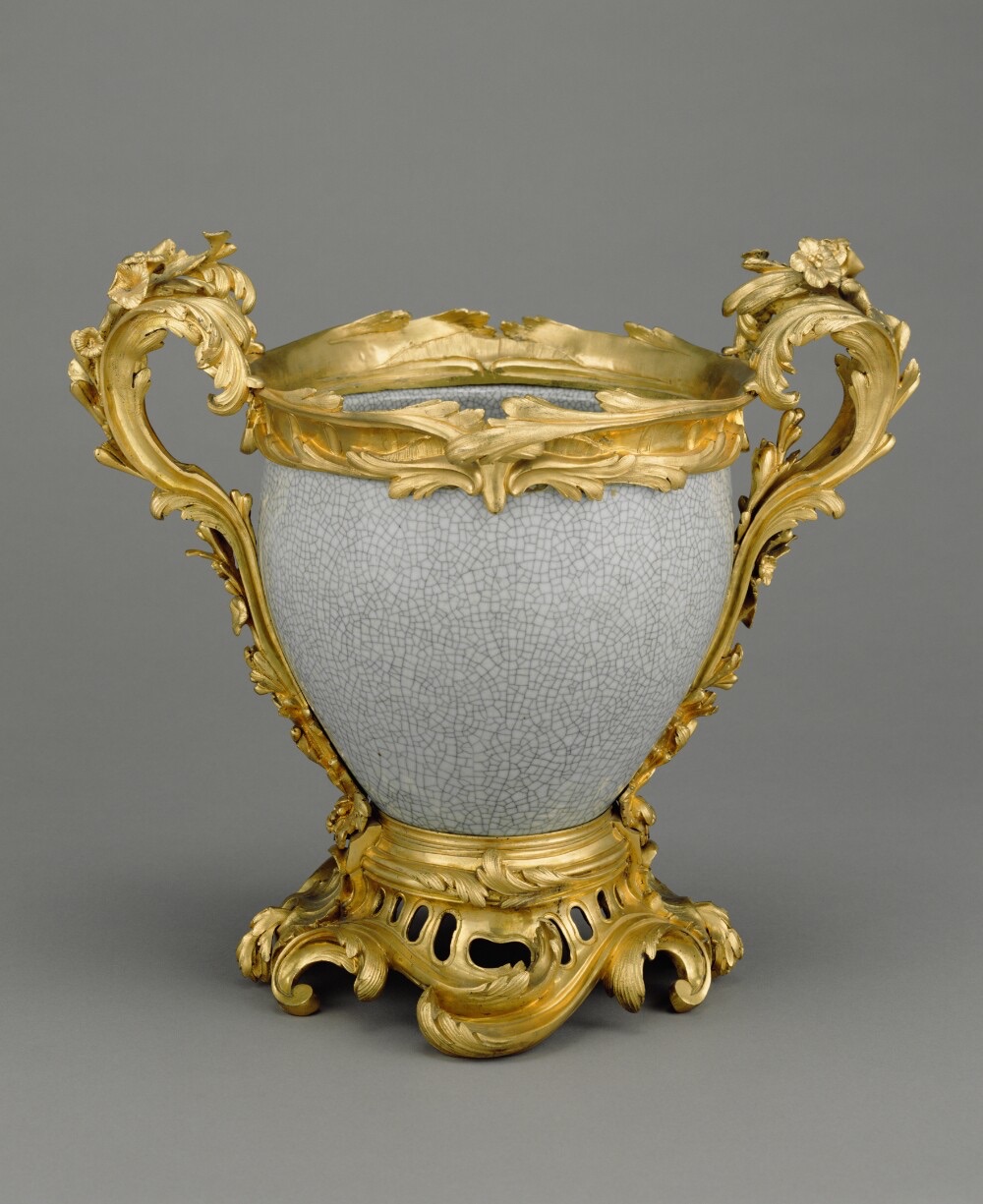
Chinese potters produced the numerous minute surface cracks in this vase by varying the cooling rates of the porcelain body and the glaze, causing each to shrink at different rates. Although the effect was originally created by accident, craquelure was soon deliberately created for decorative effect. Often a stain was used to make the cracks more pronounced. European collectors highly prized these vases and mounted them in gilt bronze to emphasize their rarity. The soft gray-green color of the glaze on this vase is known as celadon. The name is probably a corruption of Saladin (Salah-ed-din), Sultan of Egypt, who sent forty pieces of ceramics decorated with this glaze to the Sultan of Damascus in 1171. Alternatively, some scholars think the name was taken from the gray-green costume of Céladon, a character in a French play of the 1600s.