Sculpture & Decorative Arts
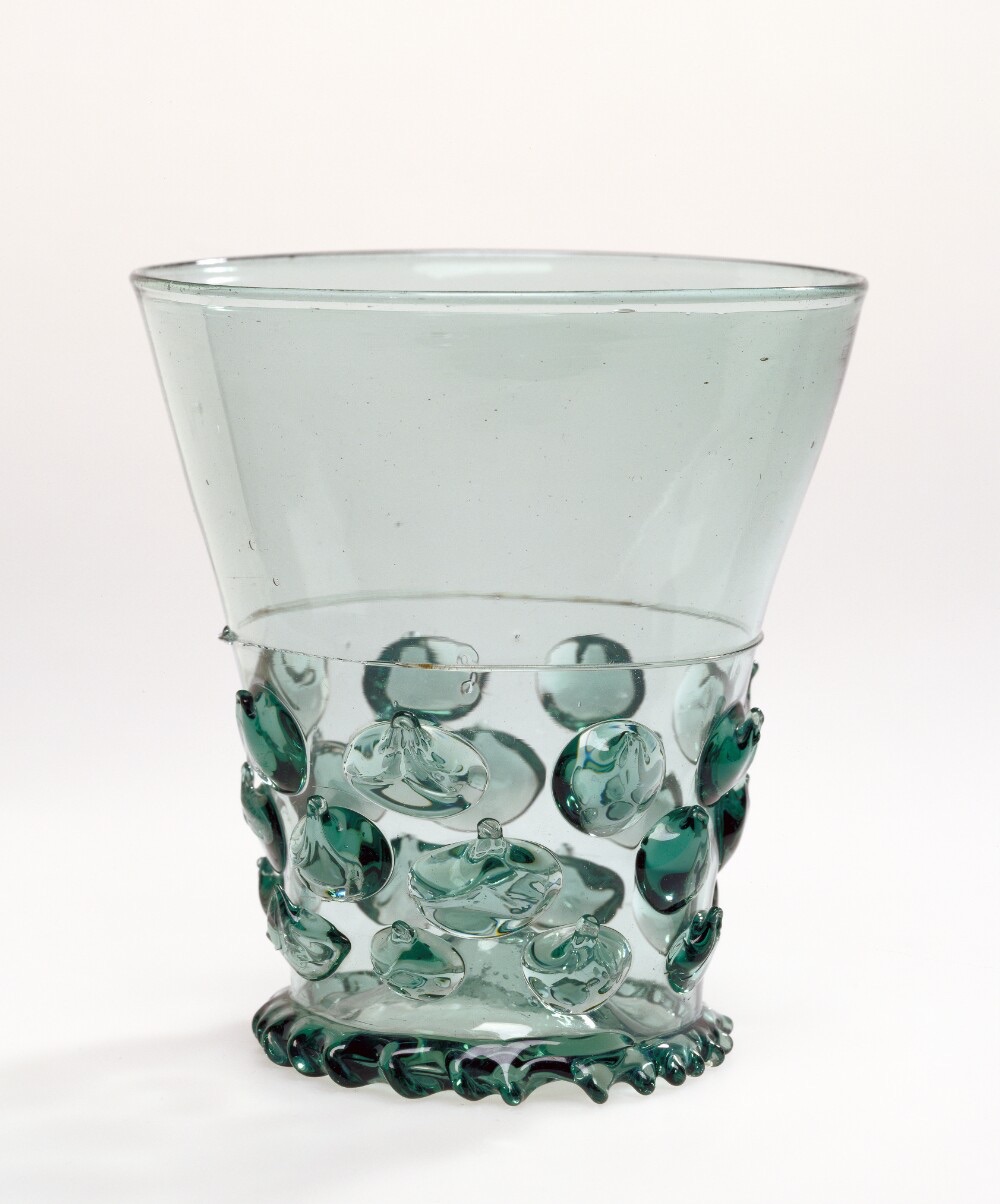
Prunted Goblet (Berkemeyer)
This popular form of German drinking glass dates from the late 1400s and continues to be made today. These beakers were made of Waldglas or forest glass, so called because it was produced in rural workshops located in forests where there were plentiful supplies of wood fuel for the glass furnaces. The characteristic green color of most Waldglas was caused by iron-rich impurities in the local sand used as a primary ingredient of the glass. Because of the popularity and aesthetic appeal of forest glass, German glassmakers continued to make it even after they were capable of producing colorless glass. The hollow stem of this drinking glass is covered with prunts or blobs of glass that may have provided a secure grip. In a text titled "Sermon on Glassmaking," a contemporary Lutheran priest wrote: "Nowadays one applies buttons, prunts and rings to glasses to make them sturdier. Thus they can be held more easily in the hands of drunken and clumsy people."