Antiquities
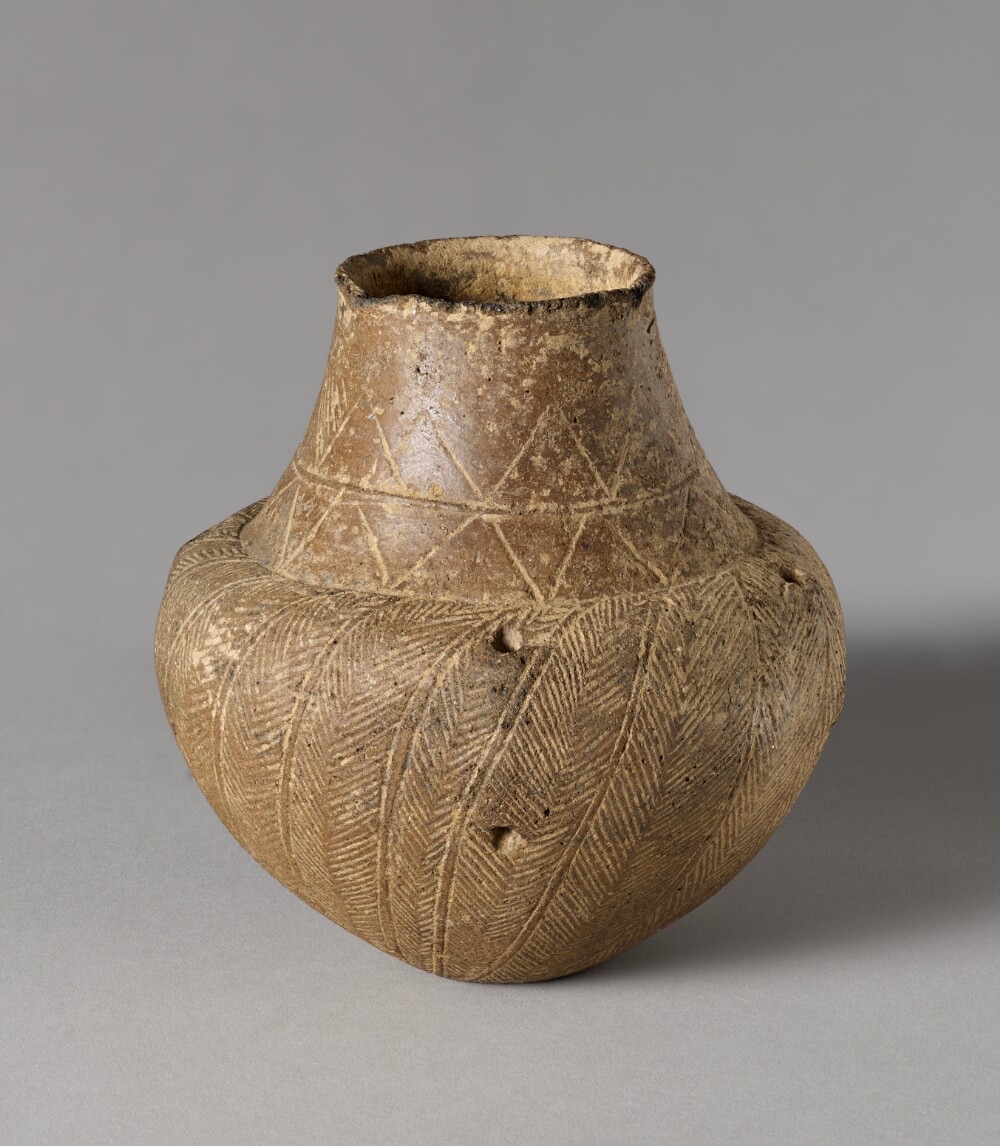
Collared Jar of the Grotta-Pelos Group
Incised patterns cover much of the surface of collared jar, with its globular body and wide, tall neck. As the potter's wheel was not yet in use in this period, this terracotta vessel was shaped by hand from coils or slabs of clay and fired in a kiln. The jar was burnished before firing, giving it a shiny compacted surface and making it less porous so that it could have been used to hold liquids such as oil or wine. The four pairs of holes in the sides were probably used to suspend the vessel. Serving a variety of practical daily functions, many of these utilitarian vases also accompanied the deceased in graves.The pottery and other material culture in the Cyclades have been systematically organized into a series of cultures or groups, each named after a specific island or site. The shape and decoration of this vessel are typical features of the earliest stage of the Cycladic period, known as the Grotta-Pelos culture (3000-2800 B.C.), named after the Early Cycladic sites of Grotta (on the island of Naxos) and Pelos (on Milos). Cycladic potters at this time often engraved terracotta vases with dense linear designs, filling the incisions with a chalky white substance to stand out against the darker surface. The herringbone pattern covering much of the exterior of this vessel was a typical motif for the period, perhaps imitating the woven texture of basketry.