Antiquities
Mythological Beaker
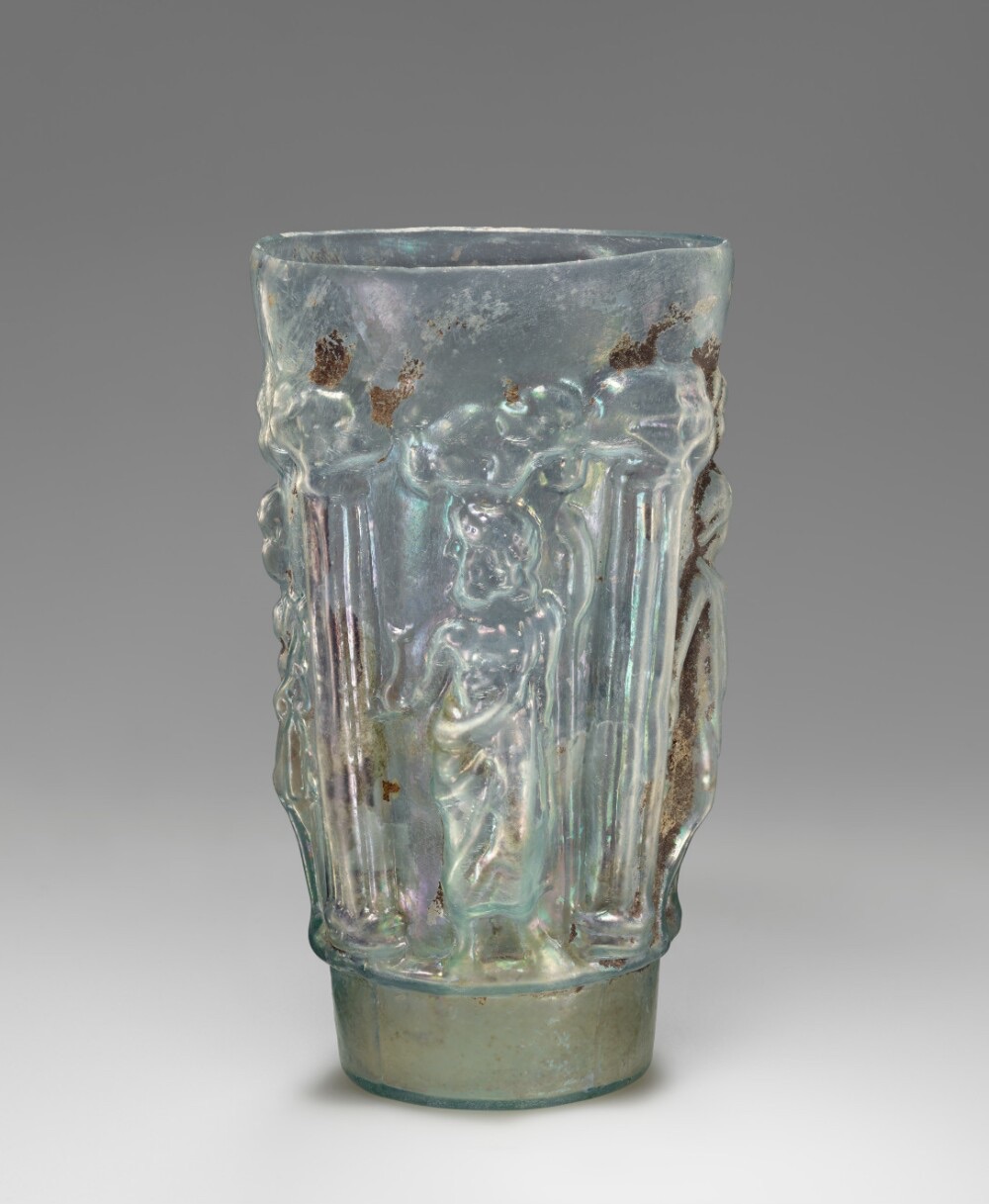
Four mythological characters, each with identifying attributes, decorate this Roman glass beaker. The trident and dolphin identify Neptune, the Roman god of the sea. On the opposite side of the beaker, Bacchus, the god of wine, carries a thyrsos and offers wine to his panther. The two other figures on the beaker are personifications raised to the level of minor deities. Bonus Eventus, who symbolizes prosperity and good fortune, holds grain and a bird. Hymen, the personification of marriage, carries a torch and a loutrophoros, a vessel associated with weddings. Glass beakers with four figures separated by columns were popular in the period from A.D. 50 to 100. This beaker was made by blowing glass into a baked clay mold, a technique that originated in the first century A.D. in the area of Roman Palestine. This technique allowed the glassmaker to create multiple identical vessels. At first the new technique was employed to produce ornate vessels, but it was soon also used to mass-produce simple forms.