Antiquities
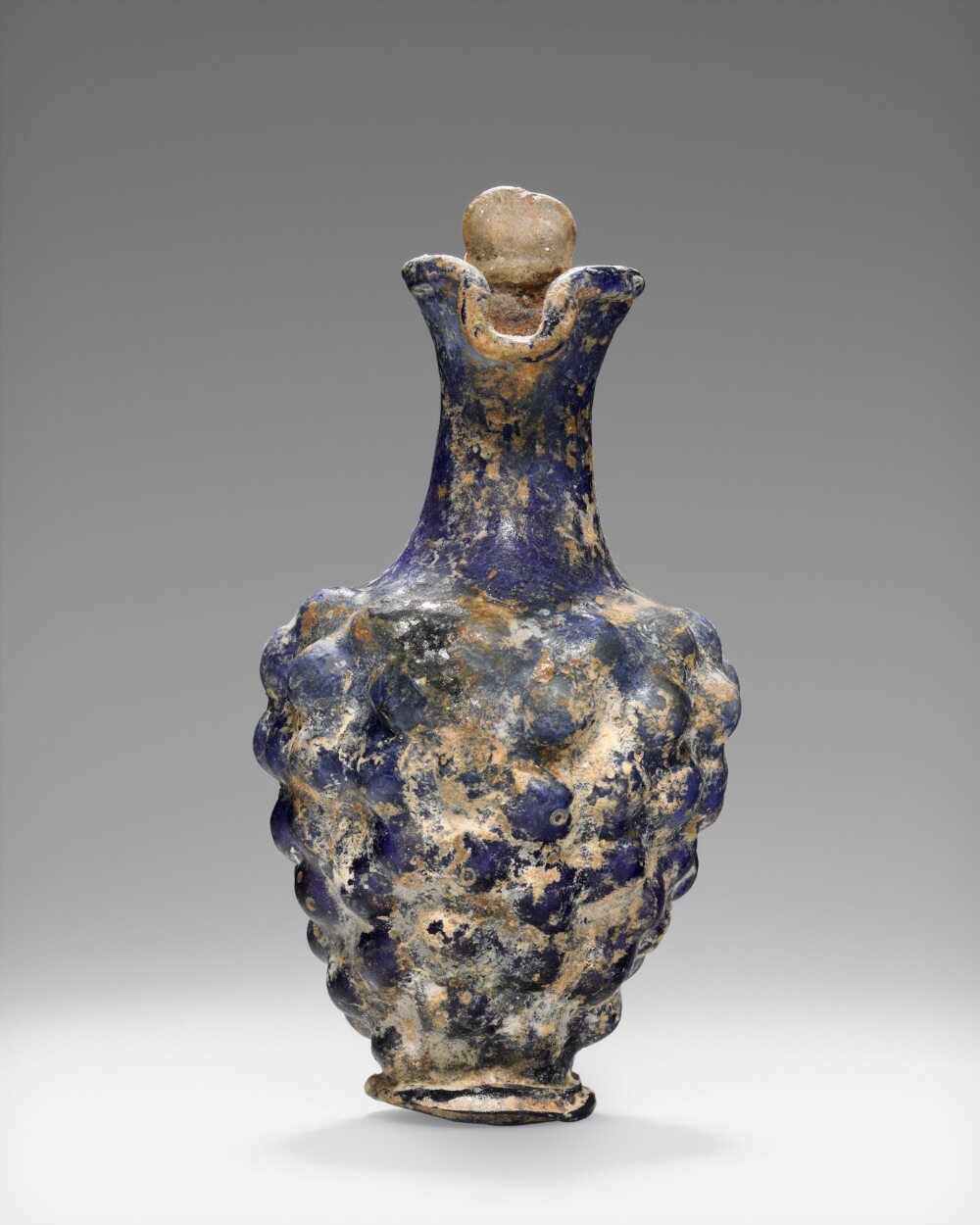
Grape Oinochoe
The body of this opaque blue pitcher is shaped like a cluster of grapes. A sturdy and slightly angular handle connects the grape-patterned body with the lip of the pitcher. This oinochoe--literally, a "wine pourer"--would have been used for serving wine at dinners or symposia, and its form certainly matches its function. The grape patterning was created by inflating hot glass into a mold which already had the pitcher's final shape and decoration carved on its inner surface. Using a mold composed of two vertical sections, the glassmaker first warmed the mold and then inflated the hot bulb of glass into its cavity. The glassmaker then separated the mold segments, releasing the glass. After transferring the grape-shaped vessel from a blowpipe to a metal rod, the surplus glass above the body was reheated and stretched to create the pitcher's long neck. The handle and base were added later. Jugs and flasks in the shape of grape bunches were blown in both the eastern and western parts of the Roman Empire. The earliest known grape vessels date to the first half of the first century A.D. Glassmakers also produced vessels shaped like other fruits, such as pomegranates and dates, or as cedar and pine cones.