Antiquities
Cameo Glass Flask
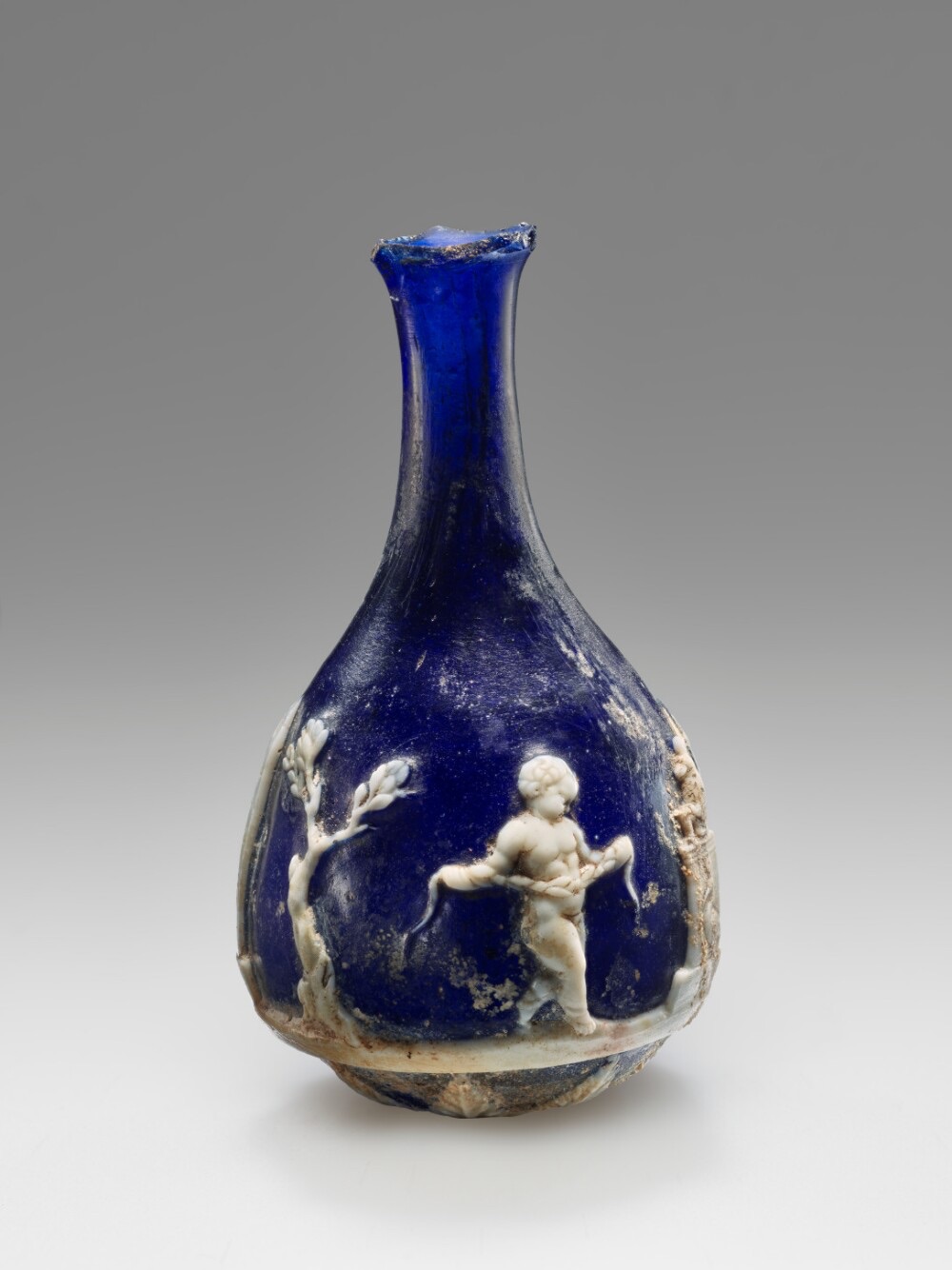
Cameo glass is primarily a product of the early Roman Empire and is specifically associated with the elite and royal of the Julio-Claudian dynasty. Its manufacture is therefore mostly limited to the decades around 25 BC – AD 25 and it is rare; less than twenty pieces have survived in their entirety. The technique imitates cameos carved from shell or colored stone and the most popular color scheme is white over a blue background. In this case, the tiny flask was first blown in translucent blue glass; after a brief period of cooling it was dipped in opaque white glass, after which it was carved and polished by a lapidary artisan. The annexation of Egypt in 30 BC and the arrival in Rome in 10 BC of two obelisks from Heliopolis helped to develop a milieu in which the use of Egyptian motifs thrived, inspiring Roman artists to evoke the imagery and iconography of ancient Egypt. While it has been suggested that the scenes on this flask might represent specific gods, such as Amon-Re, Horus and Thoth, the meaningless hieroglyphs on the obelisk as well as the general obscurity of the iconography prevents a specific reading of the narrative. Instead, the figures and motifs would seem to evoke through setting and characterization the exotic Egyptian atmosphere so popular in the art of Julio-Claudian Rome.