Antiquities
Cup
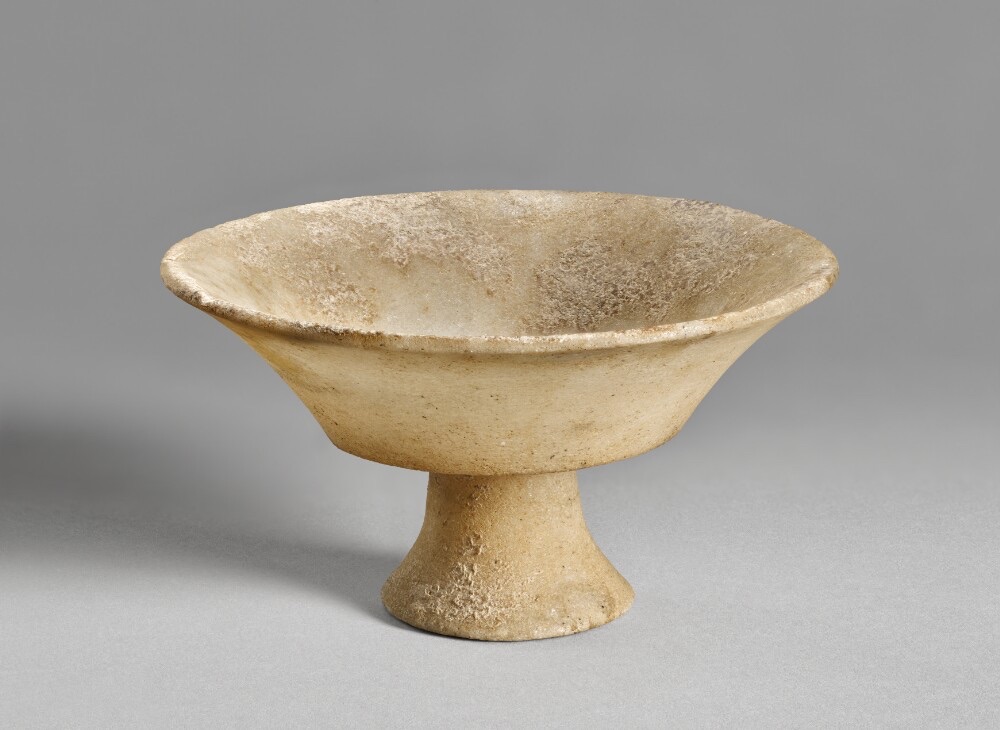
Cycladic stone or terracotta cups were made in two basic shapes: those with high pedestal feet, and those with flat bottoms. To judge from the surviving examples, the footed form was more popular than the flat one. This cup has a shallow bowl, convex sides, and is mounted on a narrow, flared foot. Marble vases such as this one were laboriously carved with blades of obsidian, a volcanic glass, and abrasives such as sand, emery, and pumice. The pedestal foot on cups was frequently left solid, requiring less labor than the earlier practice of hollowing it out. Serving a variety of practical daily functions, many of these vases also accompanied the deceased in graves.The production of stone vases was an important and characteristic industry of the Cyclades, and it was only on those islands that white marble was used as a primary material for such vessels. Marble vases like this one were laboriously carved with blades of obsidian, a volcanic glass, and abrasives such as sand, emery, and pumice. The sculptors who carved the Cycladic marble figures—perhaps the most distinctive product of the Cycladic culture—probably also made the stone vases.