Antiquities
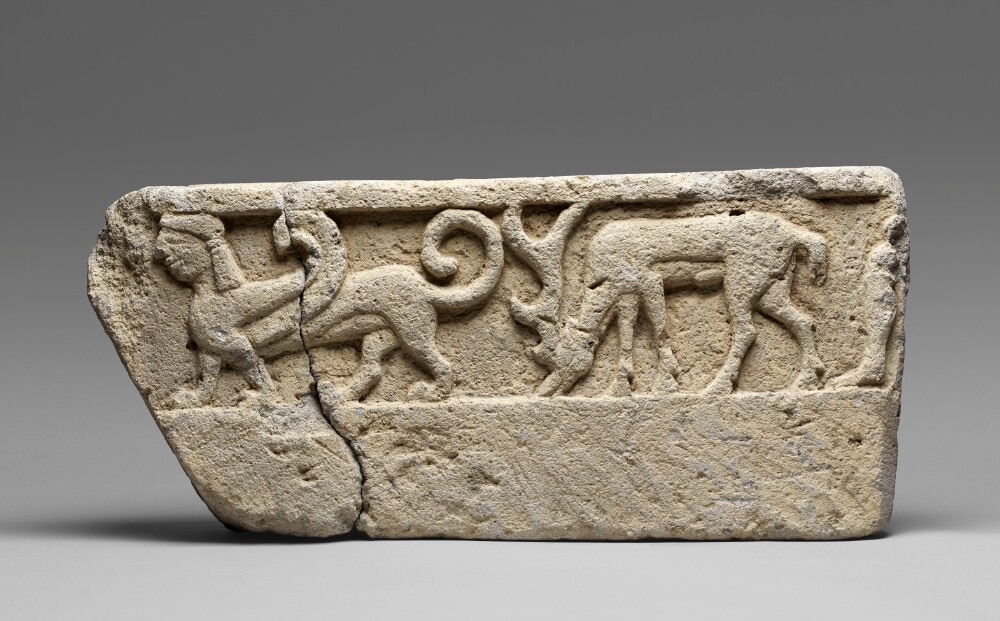
Relief with Sphinx and Stag
A section of a tufa architectural frieze block, consisting of two joined fragments, is decorated in relief with a sphinx and a grazing stag, both moving to the left. Behind the stag is a human leg shown from the knee down, which dangles from the jaws of a carnivore, probably a lion. A second non-joining fragmentary block, which is likely associated with this block, preserves a seated animal (griffin?) and a leopard protome modelled in high relief at the end (see 71.AA.337). Images of lions devouring human limbs are distinctively Etruscan and evoke the finality of death in a startling way. The motif is frequent on painted and cylinder-stamped pottery. Many architectural reliefs and freestanding sculptures were cut from beds of volcanic tufa (local porous limestone) near Vulci, a center of stone carving. To judge from the dimensions, style and condition, the frieze belonged to a building or funerary monument.