Antiquities
Beaker
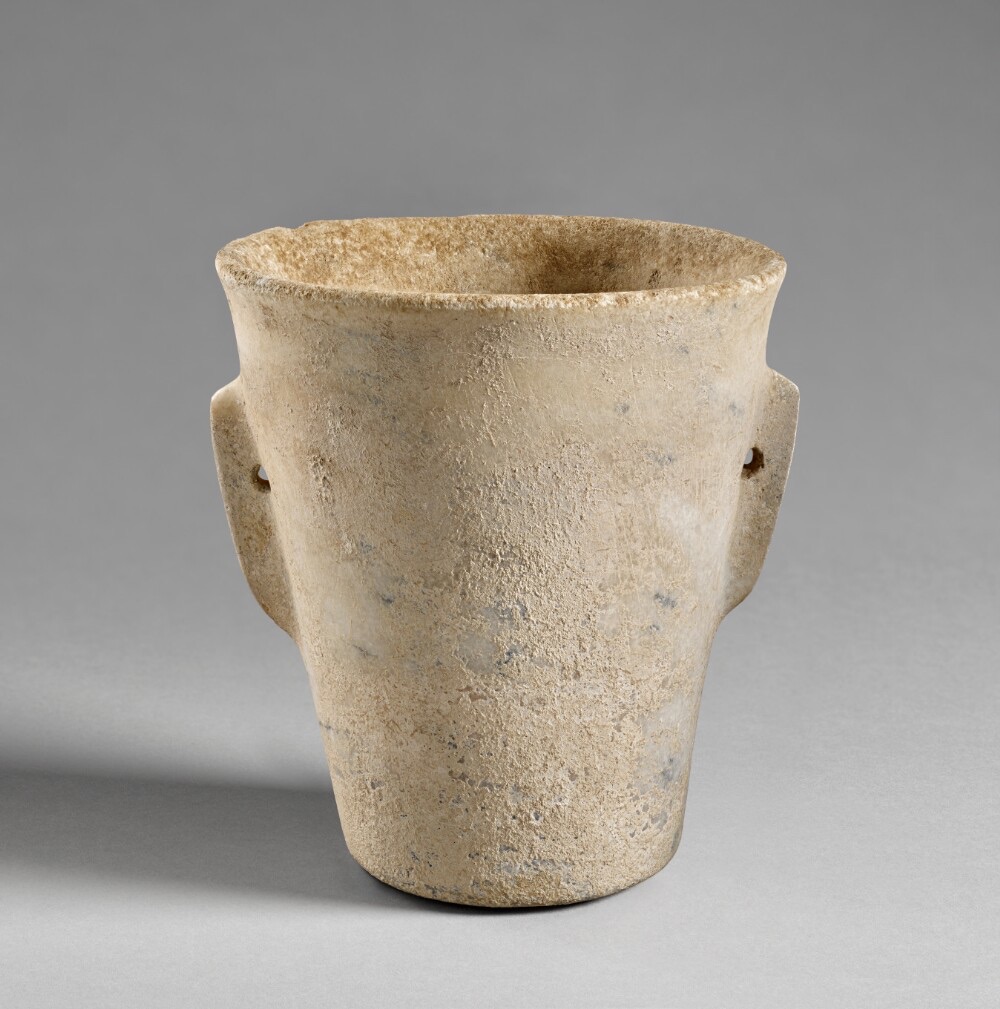
Between 3000 and 2700 B.C., the beaker was the most popular stone vessel in the Cyclades after the kandila (a collared storage jar with a pedestal foot). Cycladic craftsmen produced the beaker form in both marble and clay, and in a wide range of sizes. The typical Cycladic beaker had a tall, tapering body, a flat bottom, and sometimes pierced lugs on the body. This example seems too large for drinking. Two utilitarian lug handles, perforated for hanging or attaching a lid, imply that it was a storage container, probably for holding liquids such as water or wine. Serving a variety of practical daily functions, many of these vases also accompanied the deceased in graves.The production of stone vases was an important and characteristic industry of the Cyclades, and it was only on those islands that white marble was used as a primary material for such vessels. Marble vases like this one were laboriously carved with blades of obsidian, a volcanic glass, and abrasives such as sand, emery, and pumice. The sculptors who carved the Cycladic marble figures—perhaps the most distinctive product of the Cycladic culture—probably also made the stone vases.