Antiquities
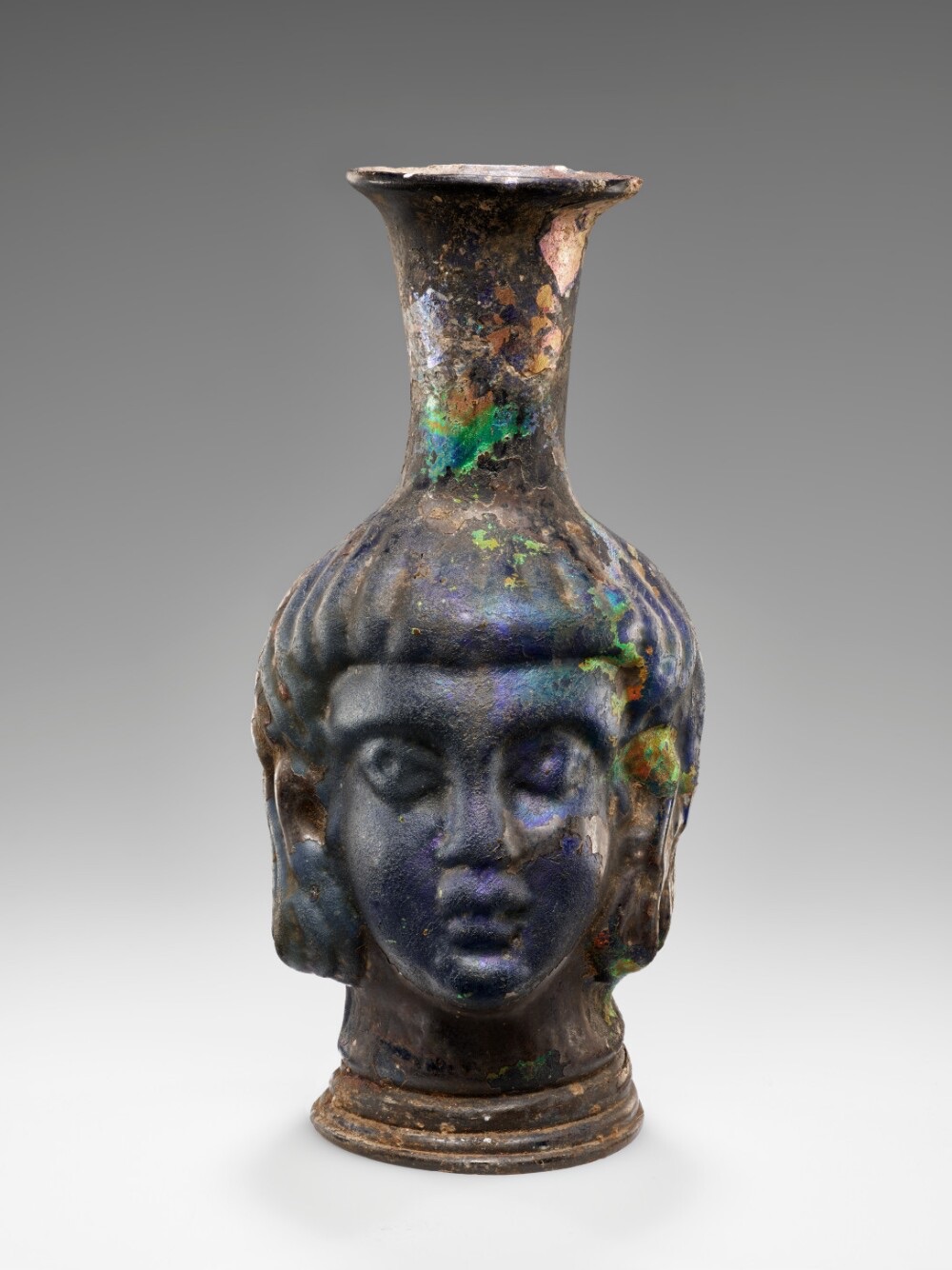
Mold-blown Head flask
This vessel features a likeness of a striking young man with hair down past his ears, but it is an idealized portrait rather than a depiction of a specific individual. With its wishbone-shaped handle, long neck, and slightly flared mouth, this large head flask likely functioned as a pitcher. Head flasks began to be made in the first century A.D. and continued to be produced into the fourth and fifth century. An extremely popular type of glassware, head flasks were mold-blown. For this flask, the glassmaker used a two-part mold for the front and back halves of the head. These two halves were joined together and, by inflating the molten glass into the mold, the design was imparted to the glass. The flask's appearance has changed significantly over the centuries. On the neck and right side of the head, a flaky layer, with a rainbow-like appearance has formed. This layer, known as iridescence, was not an effect produced by the glassmaker but is a by-product of aging and weathering. In the late nineteenth and early twentieth century, glassmakers like Louis Comfort Tiffany and Emile Gallé deliberately created an iridescent effect for their glass. Collectors today greatly value iridescence in ancient glass.