Antiquities
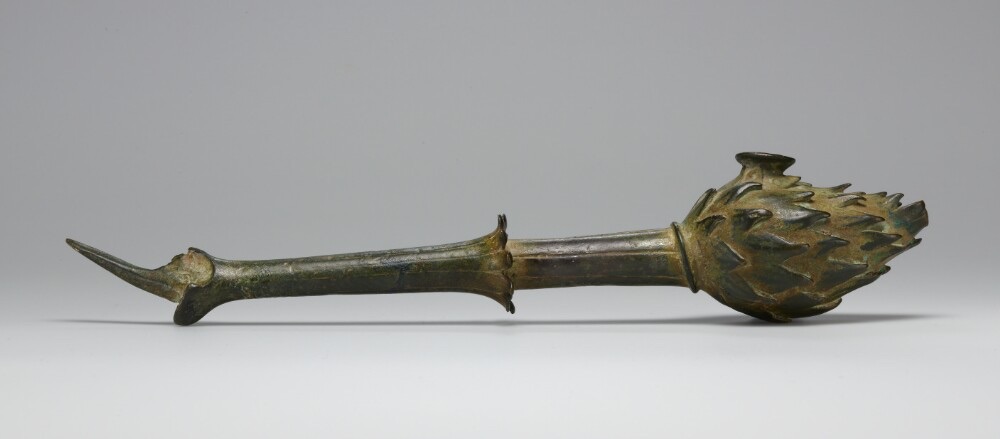
Lamp in the Form of a Thyrsos or Torch
A fluted stalk terminates in an oil lamp shaped either like the tip of a thyrsos, a pinecone-tipped staff carried by followers the wine-god Bacchus, or perhaps the burst of flame at the end of a torch. The nozzle is at the tip, and a filling-hole in the center is surrounded by a slightly funnel-like rim. Lengthwise grooves along the stem culminate in a frayed vegetal collar with ten petals, while the stalk itself ends with a curved, pointed section—a spike for mounting the lamp to a wall attachment or a stand.Ancient oil-burning lamps did not give off much light. The wealthiest Romans had lamps made from gold and silver, while the poorest homes would have used terracotta versions. Bronze lamps stood between these two ends of the economic spectrum, and many homes must have had at least a few for special occasions. Among the variety of bronze lamps produced by the Romans, a crafted ornamental lamp like this one would have been expensive. A similar example was discovered in a villa at Pompeii. Not many bronze examples survive today, because they were melted down for their metal after they went out of use.