Antiquities
Kandila
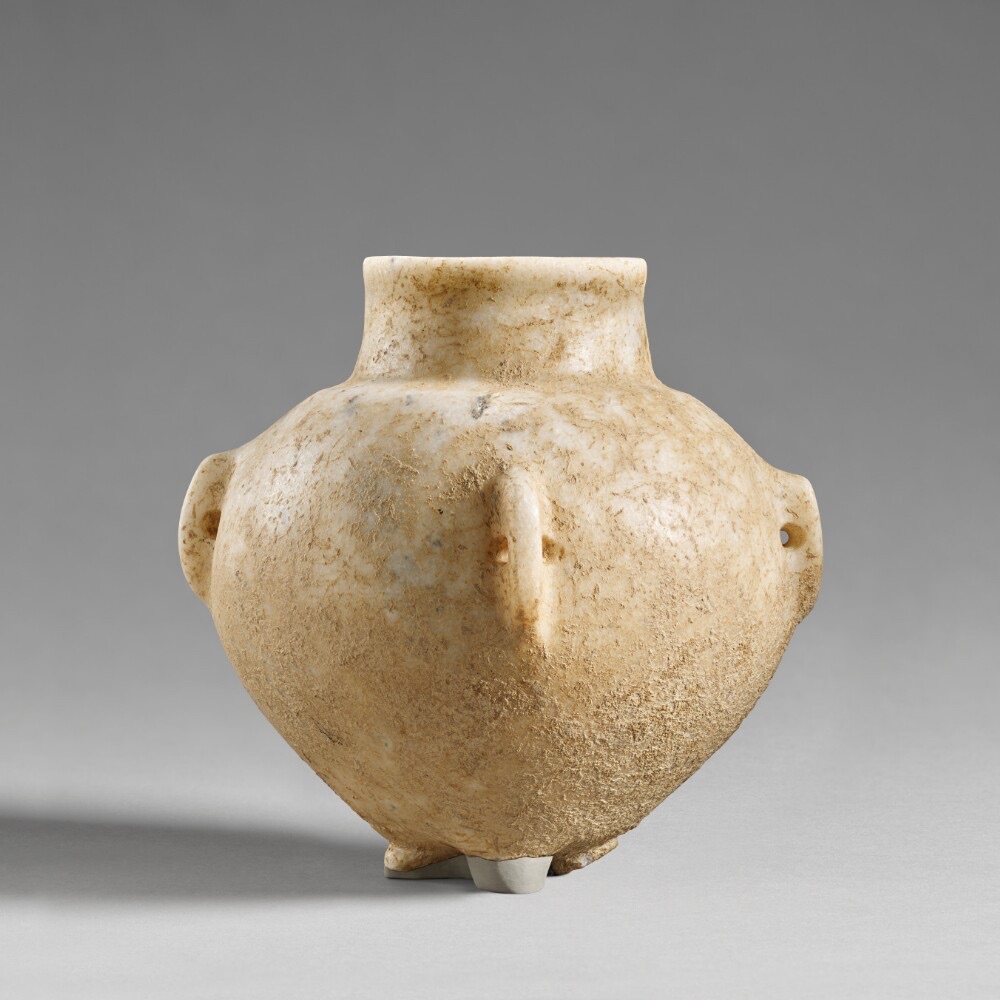
Before 2700 B.C., the most prevalent Cycladic marble vessel was the kandila, a collared storage jar with a tall, cylindrical foot. The kandila takes its name from its resemblance to modern Greek church lamps. This example has a globular body and high neck. The base of the jar, however, broke off, perhaps during manufacture, and was recarved into four small feet. Cords strung through the four pierced lugs evenly spaced around the body would have been used for hanging, or attaching a lid. Produced in both marble and clay and in a wide range of sizes, this vessel type typically held liquids, such as oil or wine. Many of these utilitarian vases, which served a variety of practical daily functions, also accompanied the deceased in graves.The production of stone vases was an important and characteristic industry of the Cyclades, and it was only on those islands that white marble was used as a primary material for such vessels. Marble vases like this one were laboriously carved with blades of obsidian, a volcanic glass, and abrasives such as sand, emery, and pumice. The sculptors who carved the Cycladic marble figures—perhaps the most distinctive product of the Cycladic culture—probably also made the stone vases.